Eritrean cuisine
Eritrean cuisine blends native traditions with Ethiopian and Italian influences.

Wikipedia / Wikimedia Commons
Eritrean cooking is rooted in the country’s own food traditions, but it has also been shaped by contact with other cultures. It is very similar to the food of neighboring Ethiopia—many dishes are shared between the two nations because they were united for centuries. Italian rule also left its mark, adding Italian influences to the mix.
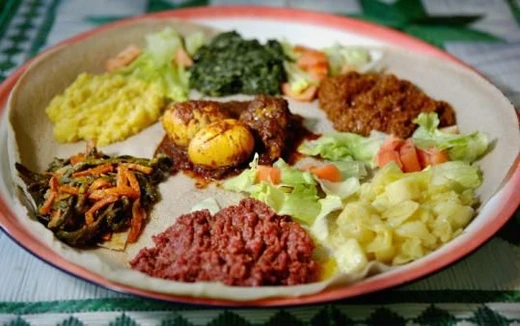
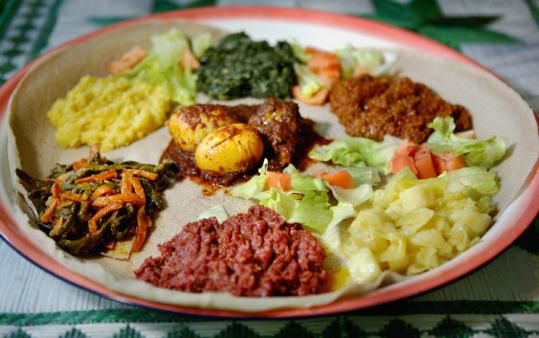
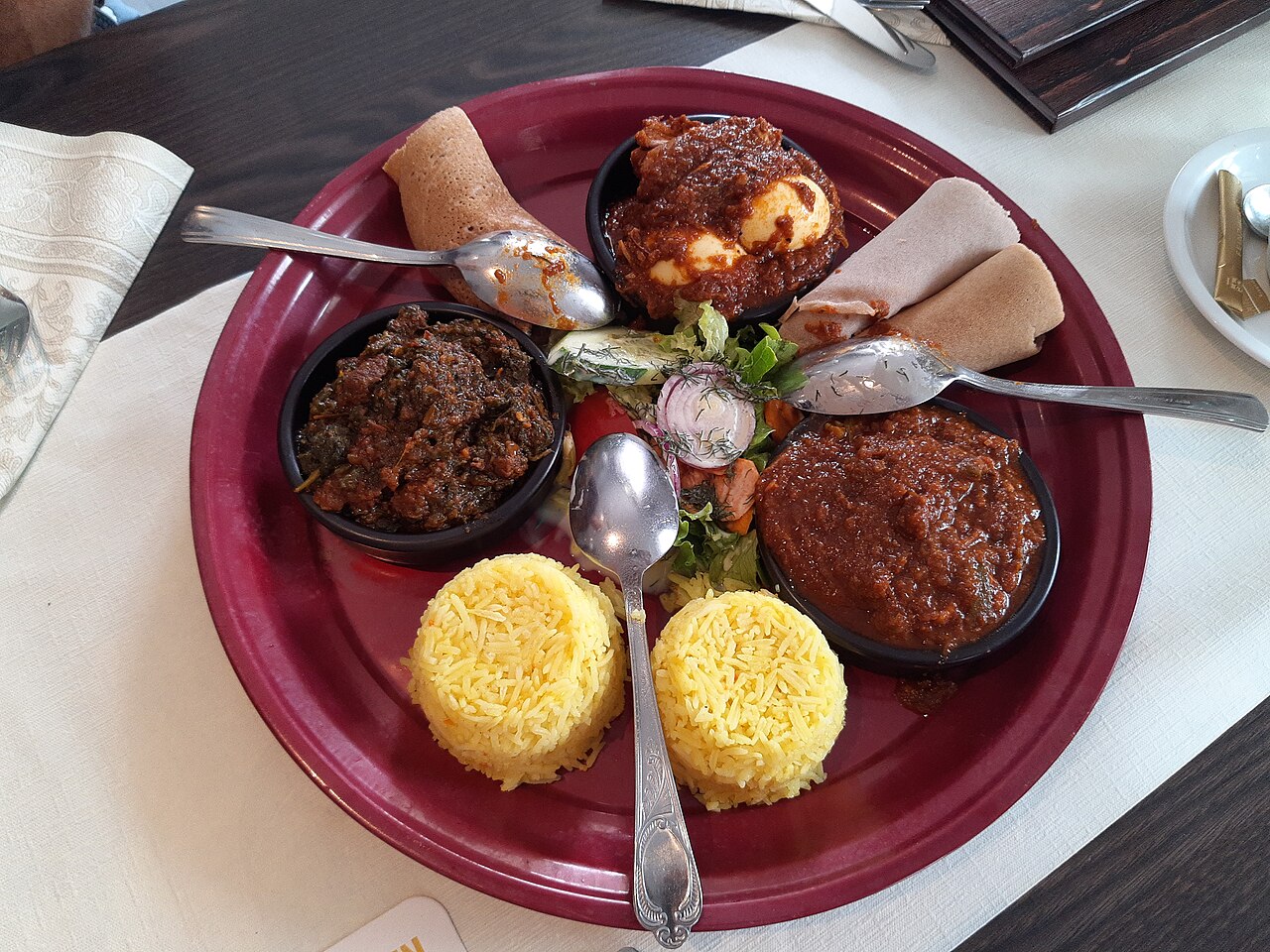
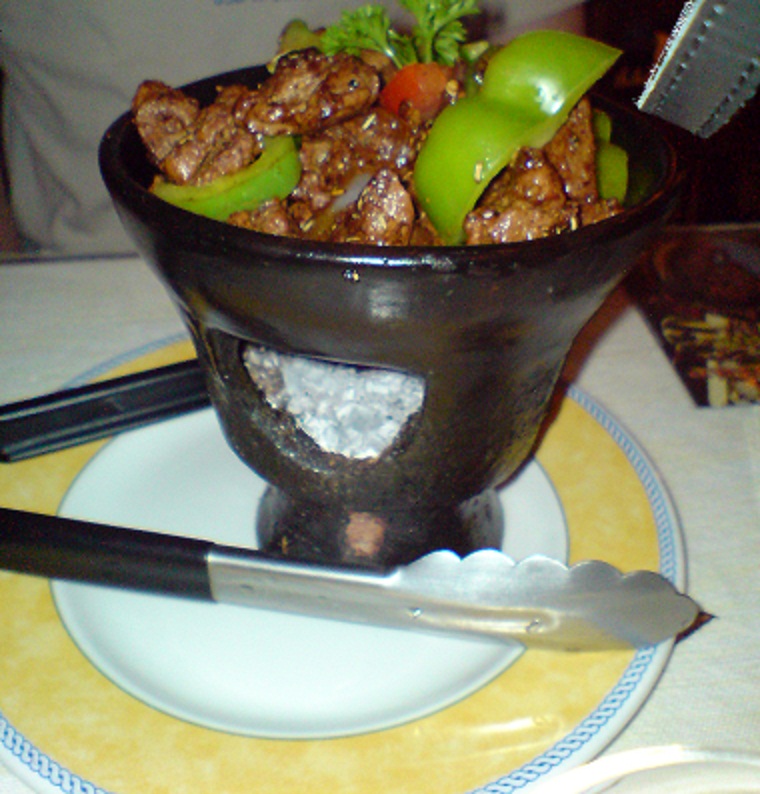
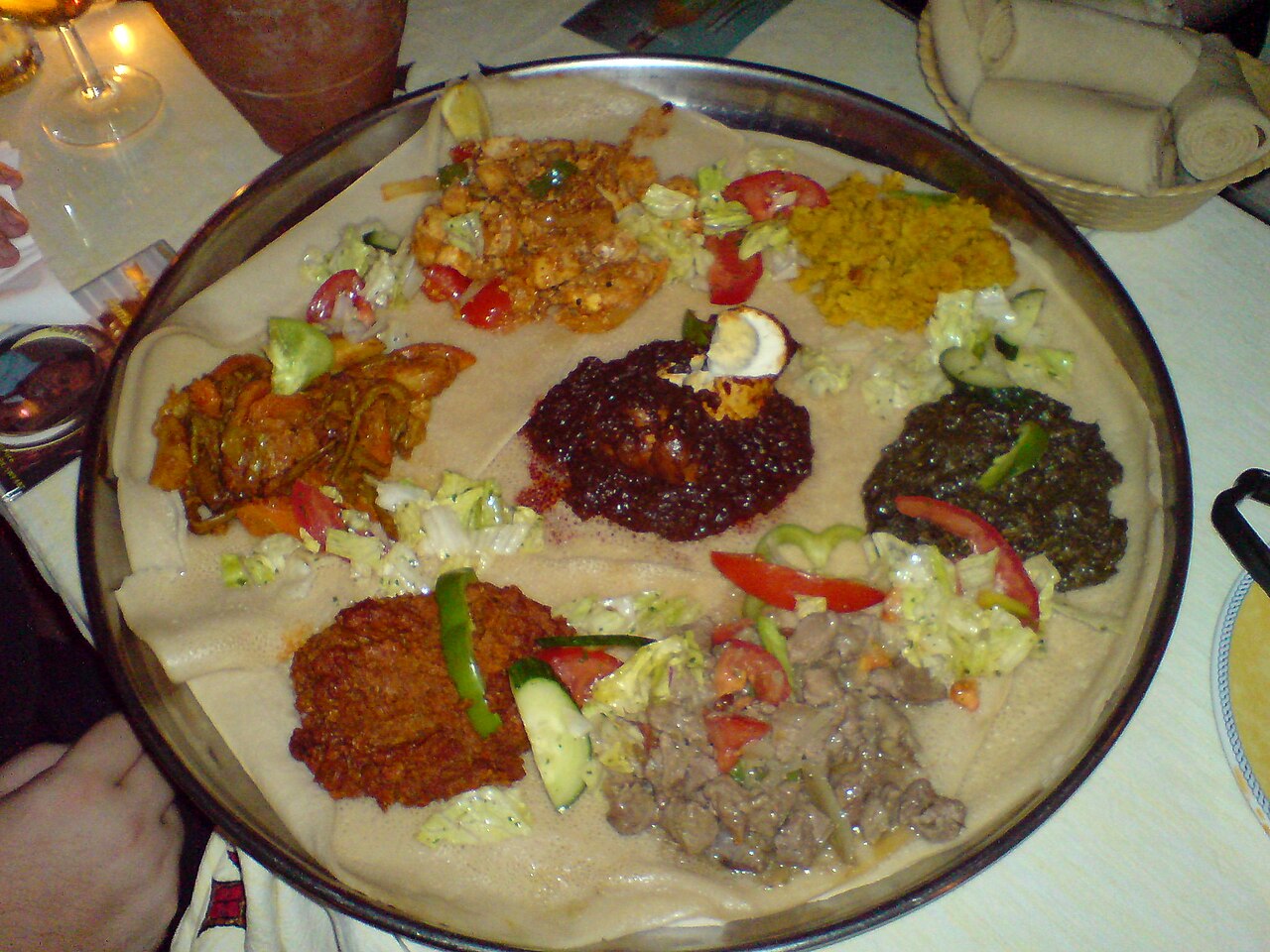
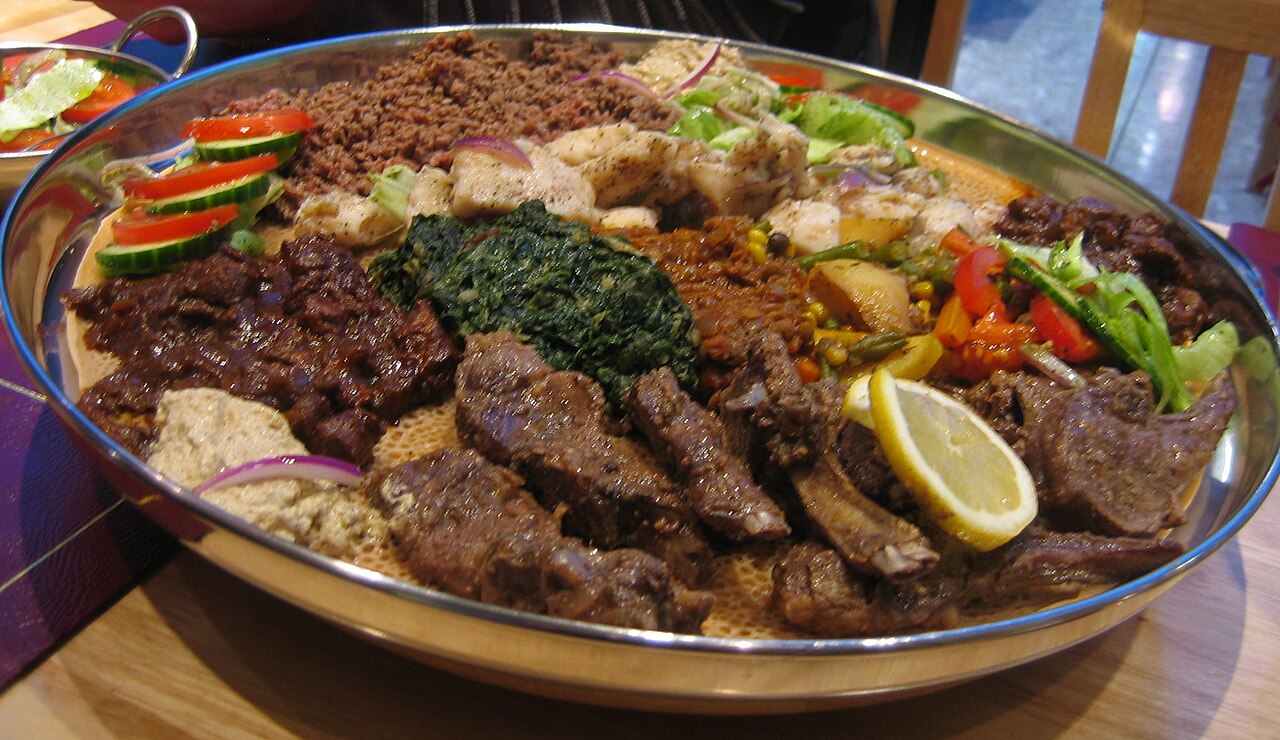
The staple meal is a spicy stew called tsebhi, served with injera, a spongy flatbread made from teff, wheat, or sorghum, and often with hilbet, a paste of lentils and fava beans. A typical dish features injera topped with a hot stew of beef, goat, lamb, or fish. Because Eritrea has a coastline, its cuisine uses more seafood than Ethiopia’s. Italian influences show up in pasta dishes and the frequent use of curry powders and cumin. Coffee is widely drunk. Christian Eritreans also drink sowa, a bitter fermented barley brew, and mies, a fermented honey drink, while Muslim Eritreans avoid alcohol.
When eating injera, people usually share from a large tray set on a low table. Layers of injera are covered with various spicy stews, and diners tear off pieces to scoop up the food. Stews are often made from beef, chicken, lamb, goat, mutton, or vegetables. Most Eritreans, except the Saho, prefer their food spicy. Almost every dish includes berbere, a blend of many herbs and spices. Common stews include zigni (beef), dorho tsebhi (chicken), alicha (a vegetable dish without berbere), and shiro (a legume purée). For ga’at, a ladle makes a hollow in the dough, which is filled with berbere and melted butter, then surrounded by milk or yogurt; diners dip pieces of ga’at into the butter mixture and then into the milk or yogurt. Italian influence also appears in pasta sauces spiced with berbere.
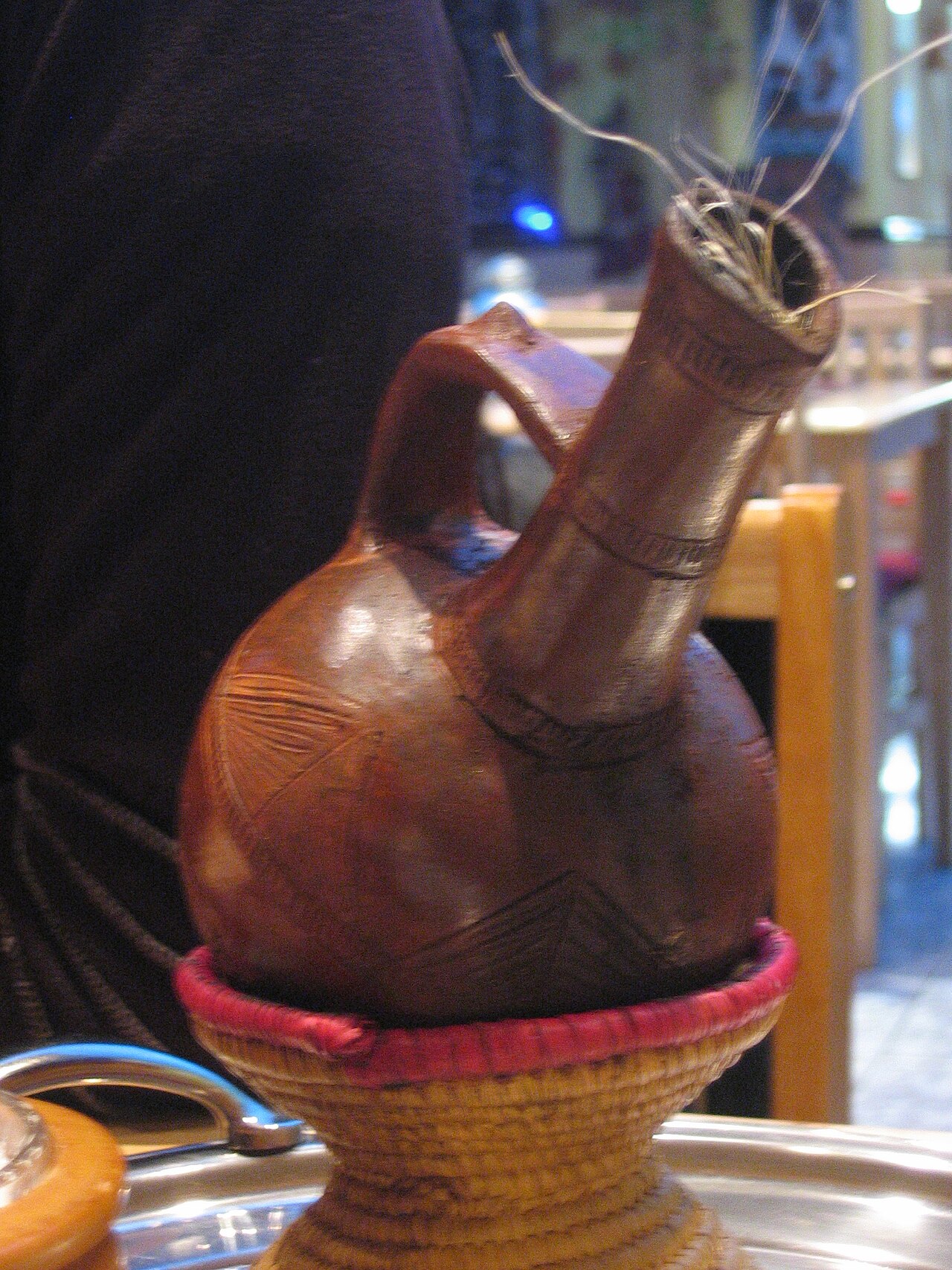
Breakfast dishes include kitcha fit-fit, made from pieces of a hearty pancake tossed in clarified butter and spices, often served with yogurt or sour milk. Fit-fit uses torn injera with leftover stew or a mix of onions, berbere, tomatoes, jalapeños, and butter. Ga’at (or akelet) is a flour-and-water porridge served with a well of clarified butter and berbere, surrounded by yogurt. Shahan ful is sautéed, mashed fava beans with onions, tomatoes, jalapeños, cumin, yogurt, and olive oil, eaten with bread. Panettone, a legacy of Italian influence, is often served with tea or during the coffee ceremony.
For lunch or dinner, most dishes are meat or vegeta
- Region
- Horn of Africa
- Key staple
- Injera (flatbread made from teff, wheat, or sorghum)
- Main stew
- Tsebhi (stew)
- Common spice blend
- Berbere
- Major influence
- Italian cuisine
- Distinctive feature
- More seafood than Ethiopian cuisine due to coastal location
Lore & Background
The main traditional food in Eritrean cuisine is tsebhi (stew), served with injera and hilbet (paste made from legumes). A typical traditional dish consists of injera accompanied by a spicy stew, frequently including beef, goat, lamb, or fish. Eritrean cooking tends to feature more seafood than Ethiopian cuisine on account of its coastal location. Owing to its colonial history, cuisine in Eritrea features more Italian influences than are present in Ethiopian cooking, including more pasta specials and greater use of curry powders and cumin.
Reader's Guide
Eritrean cuisine is significant for its reflection of the nation's history and geography. The strong similarities with Ethiopian cuisine stem from centuries of unification, while Italian colonization introduced pasta, curry powders, cumin, and dishes like lasagna and cotoletta alla milanese. The coastal location gives Eritrean cooking a greater emphasis on seafood compared to Ethiopia. The cuisine is also notable for its coffee ceremony, a central part of Eritrean culture, and for beverages like sowa (a bitter fermented barley) and mies (a fermented honey beverage), though Muslim Eritreans abstain from alcohol. The use of berbere, a mixture of herbs and spices, accompanies almost all dishes, and stews such as zigni, dorho tsebhi, alicha, and shiro are common. The cuisine's unique interpretations of Italian dishes, such as pasta sauces spiced with berbere, highlight the blend of influences.
Did You Know?
- Eritrean cuisine shares very strong similarities with Ethiopian cuisine due to the two nations having been unified for hundreds of years.
- Eritrean cooking tends to feature more seafood than Ethiopian cuisine on account of its coastal location.
- Italian colonization introduced pasta specials and greater use of curry powders and cumin to Eritrean cuisine.
- Christian Eritreans drink sowa (a bitter fermented barley) and mies (a fermented honey beverage), while Muslim Eritreans abstain from drinking alcohol.
Cuisine as Cultural Identity and Communal Language
Eritrean cuisine, like all culinary traditions, is far more than a system for feeding the body. It functions as a symbolic language through which a society communicates its values, heritage, and collective memory. The distinctive ingredients, preparation techniques, and signature dishes that define a regional food culture emerge from the specific geography, climate, and agricultural resources of a place, weaving together into a coherent expression of identity. In Eritrea, as in many societies, the act of preparing and sharing a meal is a communal ritual that transmits cultural knowledge from one generation to the next. Meals mark religious holidays, family celebrations, and other pivotal life events, and certain traditional dishes carry deep symbolic meaning that extends well beyond mere sustenance. Culinary traditions become closely intertwined with national and regional pride, with specific preparations serving as emblems of who a people are and where they come from. In this way, the kitchen becomes a repository of history, and the shared table a stage for cultural continuity.
Climate, Faith, and the Spice Routes
The flavors that characterize any regional cuisine are shaped by a constellation of forces: local climate, religious dietary laws, international trade, and cross-cultural culinary exchange. Climate, in large measure, dictates which native foods can be cultivated and how they must be preserved. In tropical settings, diets tend to lean toward fruits and vegetables, while colder regions rely more heavily on meat and fish. Preservation methods such as smoking, curing, and pickling have long altered the gustatory properties of foods to sustain communities through lean seasons. Religious food laws also leave a deep imprint on what is prepared and consumed, as seen across Hindu, Sikh, Buddhist, Christian, Islamic, and Jewish traditions. Trade has been equally transformative. Dating back to the ancient spice trade, seasonings like cinnamon, cassia, cardamom, ginger, and turmeric moved along commercial routes, with cinnamon and cassia reaching the Middle East at least four thousand years ago. These exchanges of ingredients and techniques across borders and centuries have continuously enriched the palettes of regional foodways.
Cultural Exchange and the Making of New Dishes
No cuisine exists in isolation. Every culinary tradition is a dynamic system that continually adapts while maintaining ties to its origins, shaped by migration, colonization, and the spread of empires. Historical interactions such as the Columbian exchange and the Silk Road introduced entirely new ingredients and methods that transformed local foodways. Tomatoes, chilies, and potatoes, all originally from the Americas, became indispensable to Italian, Indian, and Irish cuisines respectively, demonstrating how a single ingredient can reshape an entire tradition. A striking example of culinary culture exchange is the development of tempura in Japan: when European missionaries arrived in the second half of the sixteenth century, the combination of Spanish and Portuguese game-frying techniques with an East Asian method of cooking vegetables in oil produced a wholly new dish. Eritrean cuisine, like all culinary traditions, has been shaped by the crossroads of trade routes and cultural encounters, absorbing and transforming external influences while layering them onto indigenous practices to create a food culture that is both rooted and ever-evolving.
Innovation, Globalization, and the Living Table
Since the latter part of the twentieth century, the global food landscape has been reshaped by restaurants, media, and travel, exposing people to an extraordinary range of culinary traditions. This wave of globalization has produced a dual effect: it both preserves traditional foodways and fuels the rise of fusion cuisine, which blends elements from multiple cultures without being categorized under any single style. The 1970s saw the emergence of fusion innovations in contemporary restaurant kitchens, while the 1960s brought nouvelle cuisine, a French approach to cooking and presentation popularized by critics Henri Gault, André Gayot, and Christian Millau. More recently, molecular cuisine—coined in 1999 by French chemist Hervé This—harnesses scientific disciplines to reimagine the plate. International trade continues to introduce new foodstuffs to existing traditions. For Eritrean cuisine, as for all culinary traditions, this means an ongoing negotiation between continuity and change: honoring ancestral techniques while remaining open to the creativity that cross-cultural appreciation inspires.
Gallery
Frequently Asked Questions
What is the central staple of Eritrean cuisine?
Injera, a spongy flatbread made from teff, wheat, or sorghum, forms the base of nearly every Eritrean meal. It doubles as both the plate and the utensil, used to scoop up stews and pastes.
What is tsebhi in Eritrean cooking?
Tsebhi is the signature spicy stew that sits atop injera, typically prepared with beef, goat, lamb, or fish. It is the centerpiece of a traditional Eritrean plate and is almost always accompanied by hilbet, a thick paste of lentils and fava beans.
How does Eritrean food differ from Ethiopian food?
Although the two cuisines share many dishes because the nations were politically united for centuries, Eritrean cooking features noticeably more seafood and coastal preparations. That distinction comes directly from Eritrea's position along the Red Sea.
What Italian influence can be found in Eritrean cuisine?
Decades of Italian colonial rule introduced pasta, coffee culture, and certain baking techniques into local kitchens. These elements now sit alongside native spice blends like berbere as part of the everyday Eritrean table.
What is berbere and why is it important to Eritrean cooking?
Berbere is the foundational spice blend that gives Eritrean stews their signature heat and deep color. It is the go-to seasoning for tsebhi and most savory preparations across the Horn of Africa.
More in Eritrean cuisine 1-24
Spotted an error? Know more?
This is a living reference — every entry is fact-audited, and reader corrections feed straight into our audit queue. Suggest an edit · See this site's audit record