
Jebena
Traditional Ethiopian and Eritrean ceramic coffee-brewing flask.

Wikipedia / Wikimedia Commons
The jebena (Amharic: ጀበና, romanized: ǧäbäna, Arabic: جبنة, romanized: jabana) is a traditional ceramic coffee-brewing flask used in Ethiopia and Eritrea. It is the central artifact of the coffee ceremony in both countries, serving as both a practical tool and a cultural symbol of identity, status, and shared experience.
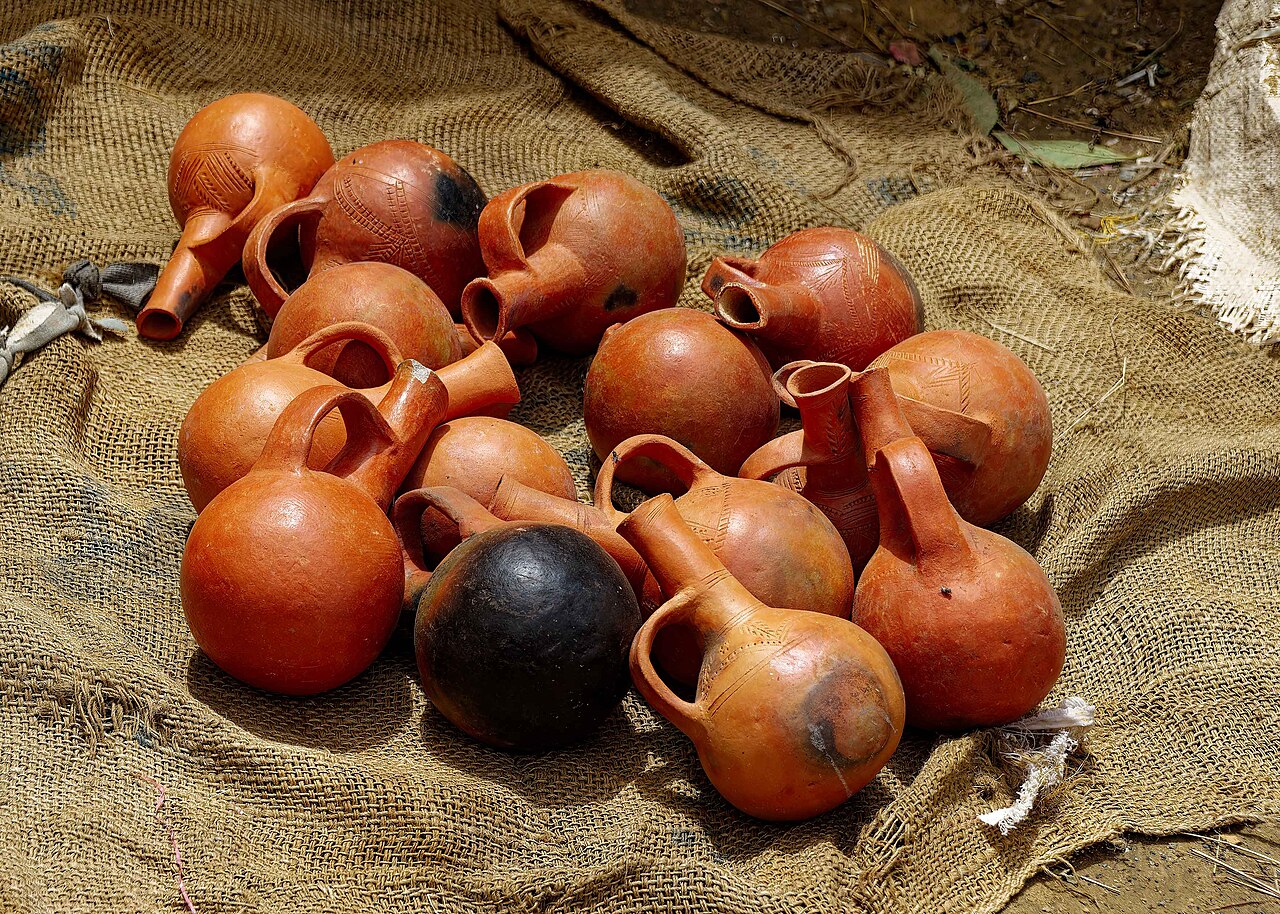
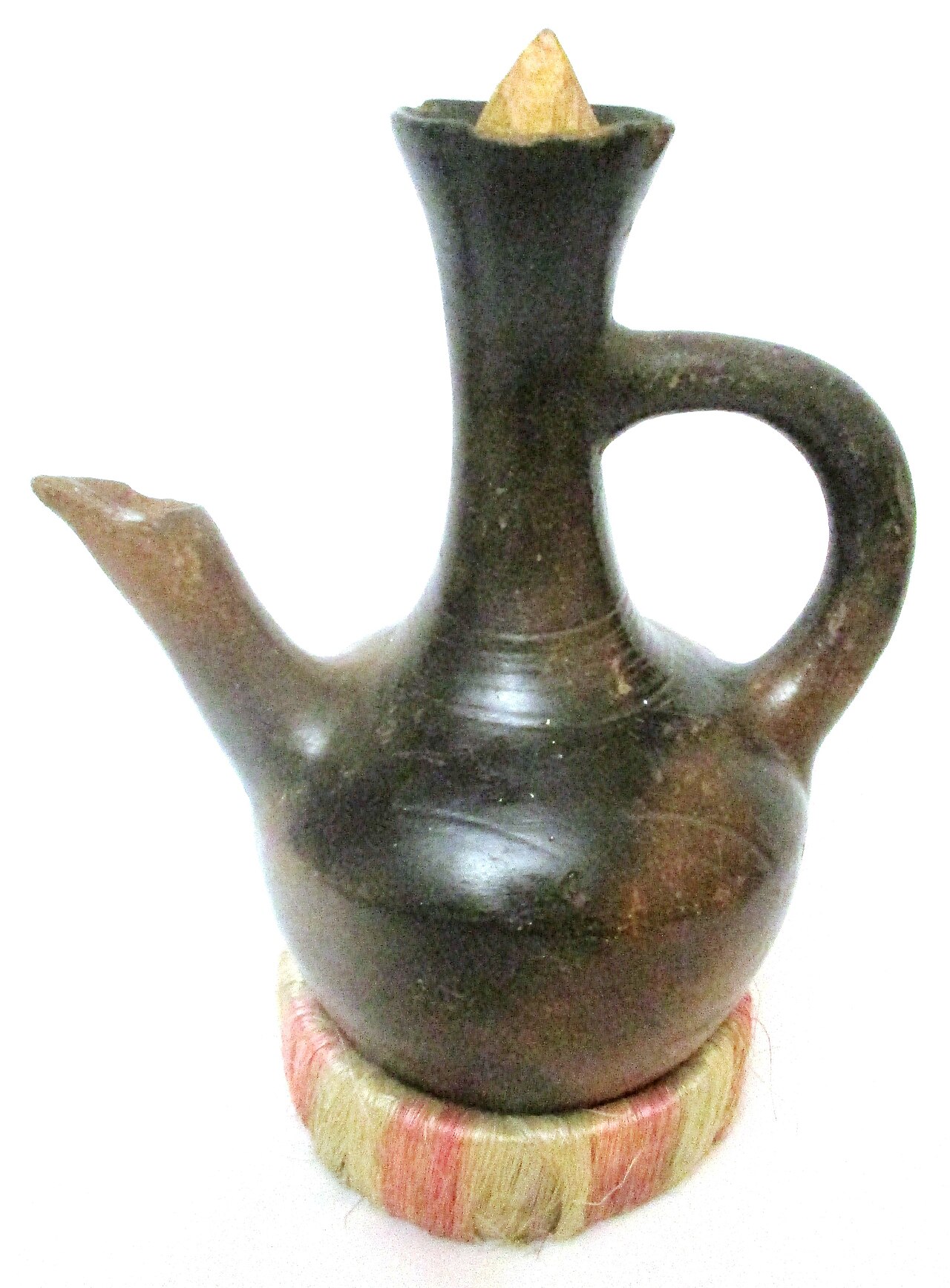
The jebena is roughly medium-sized, typically standing 20 to 45 centimeters tall. Its shape is defined by a narrow neck, a pouring spout, and a handle connecting the neck to the base. Ethiopian jebenas usually have a separate spout lower on the pot for pouring coffee, a feature absent from most Eritrean jebenas, which use a single spout for both filling and pouring. Regional variants may include a differently shaped base, a straw lid, or an extra spout. The base is large and circular with a flat bottom for stability. The top is curved for easier pouring of water and grounds, and the narrow neck acts as a strainer to keep grounds from escaping. A plug made of cloth, straw, or clay seals the top to prevent spills. The pot is often placed on a decorative cloth throne or hay to protect surfaces from its hot base.
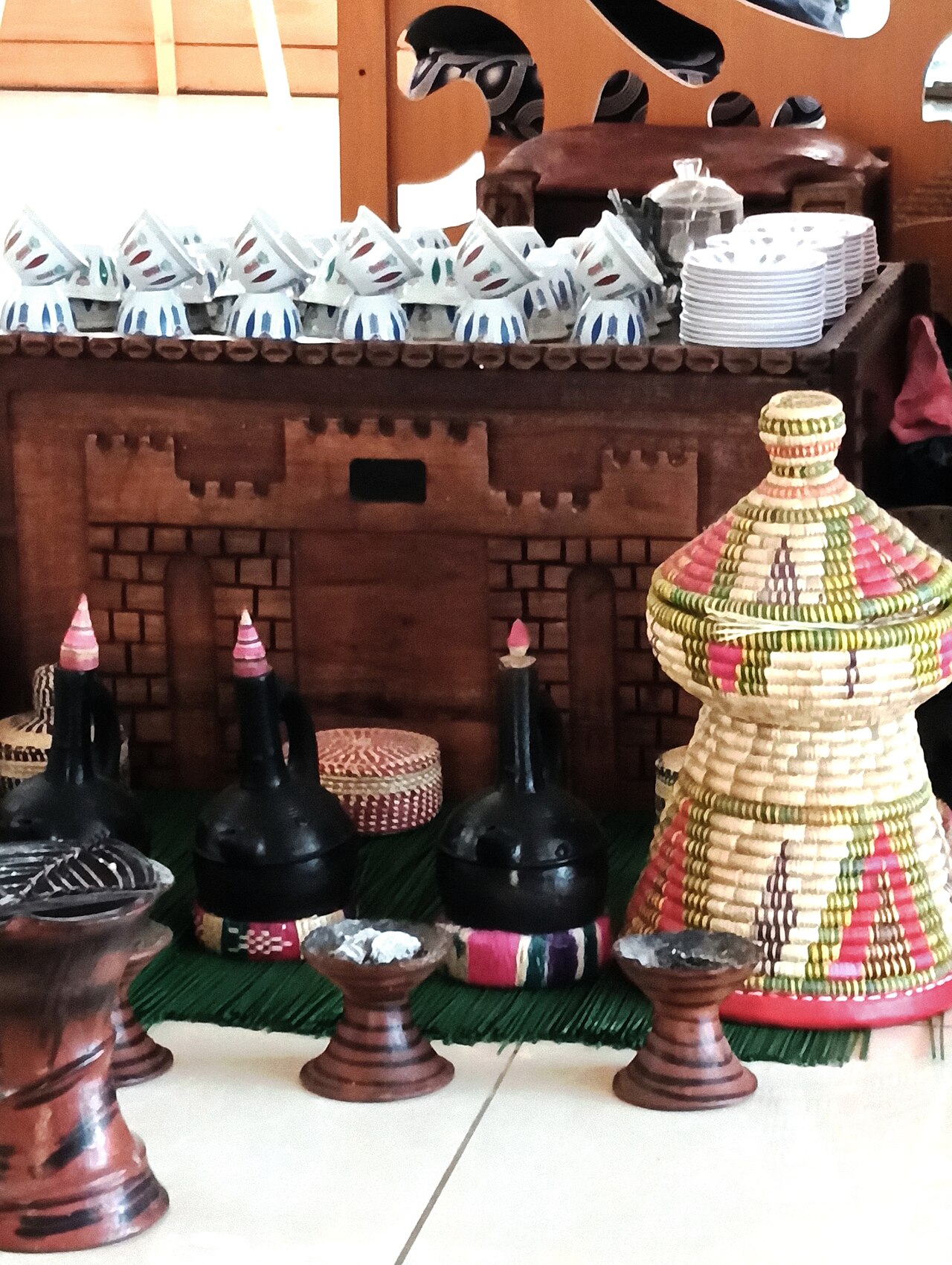
The jebena is closely tied to the history of coffee in Ethiopia, where coffee is known as "bunna." Families typically own only one jebena, passed down through generations as both a practical heirloom and an ornate artifact. It represents shared cultural experience and social status. Decorations and designs on the jebena reflect the host’s ethnic identity and social standing. Potters in Ethiopia often lack tools like potter’s wheels, so a highly decorated jebena is a sign of wealth. Among upper classes and royalty, gold or silver plating is common. Other decorations include bright colors or traditional dot paintings. The clay cups used to serve coffee are usually made from the same clay and similarly decorated.
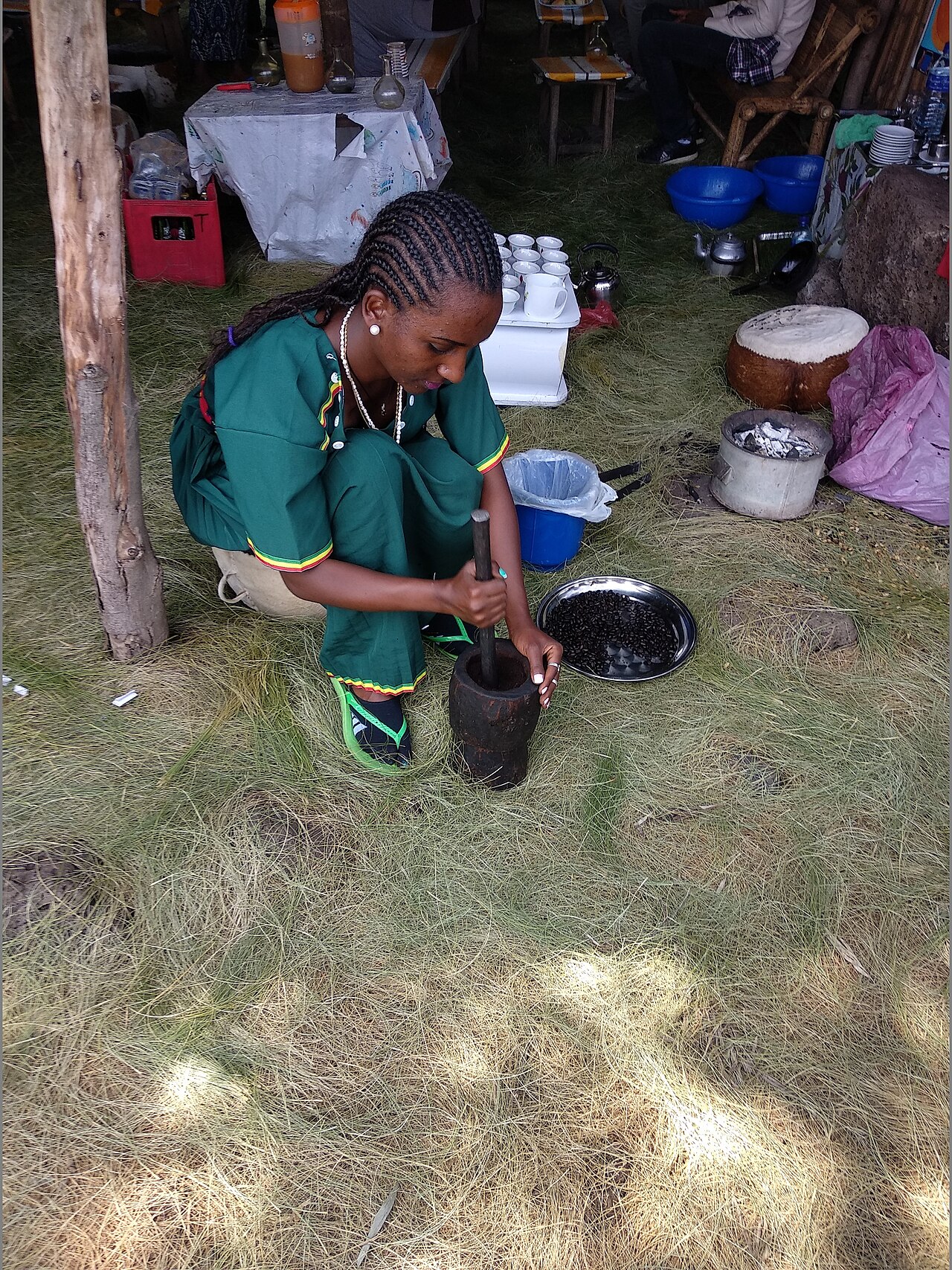
Brewing coffee in the jebena is tied closely to womanhood. The youngest woman in the family typically initiates the process. The ceremony is a social event: families socialize while the beans are roasted and the coffee brews. Traditionally, households participate in the ceremony three times a day, with the woman preparing the coffee announcing it to everyone and inviting them to join before beginning. If a jebena is not used to prepare and boil the coffee, the ceremony is not considered to have taken place. The long brewing time
- type
- Ceramic coffee-brewing flask
- origin
- Ethiopia and Eritrea
- material
- Clay (also porcelain or metal in modern variants)
- height
- Approximately 20–45 cm (7.9–17.7 in)
- key_feature
- Narrow neck-like spout that acts as a strainer
- associated_ritual
- Coffee ceremony (bunna)
Lore & Background
The jebena is made from clay and has a round bottom with a narrow spout and a handle on the side. Its shape and design reflect the ethnic identity of the host, with Ethiopian variants typically featuring a separate spout for pouring coffee, while most Eritrean jebenas have only one spout. The base is large and circular with a flat bottom for balance, and the top is curved for easy pouring. A plug made of cloth, straw, or clay stops water from spilling out during brewing.
Families usually own only one jebena, which is passed down through generations as a practical, ornate heirloom. The jebena is considered an artifact as well as a tool, representing significant shared cultural experience and status. Potters in Ethiopia often lack access to tools such as potter's wheels, so a highly decorated jebena is a sign of wealth and status. Among the upper class and royalty, gold and silver plating is common.
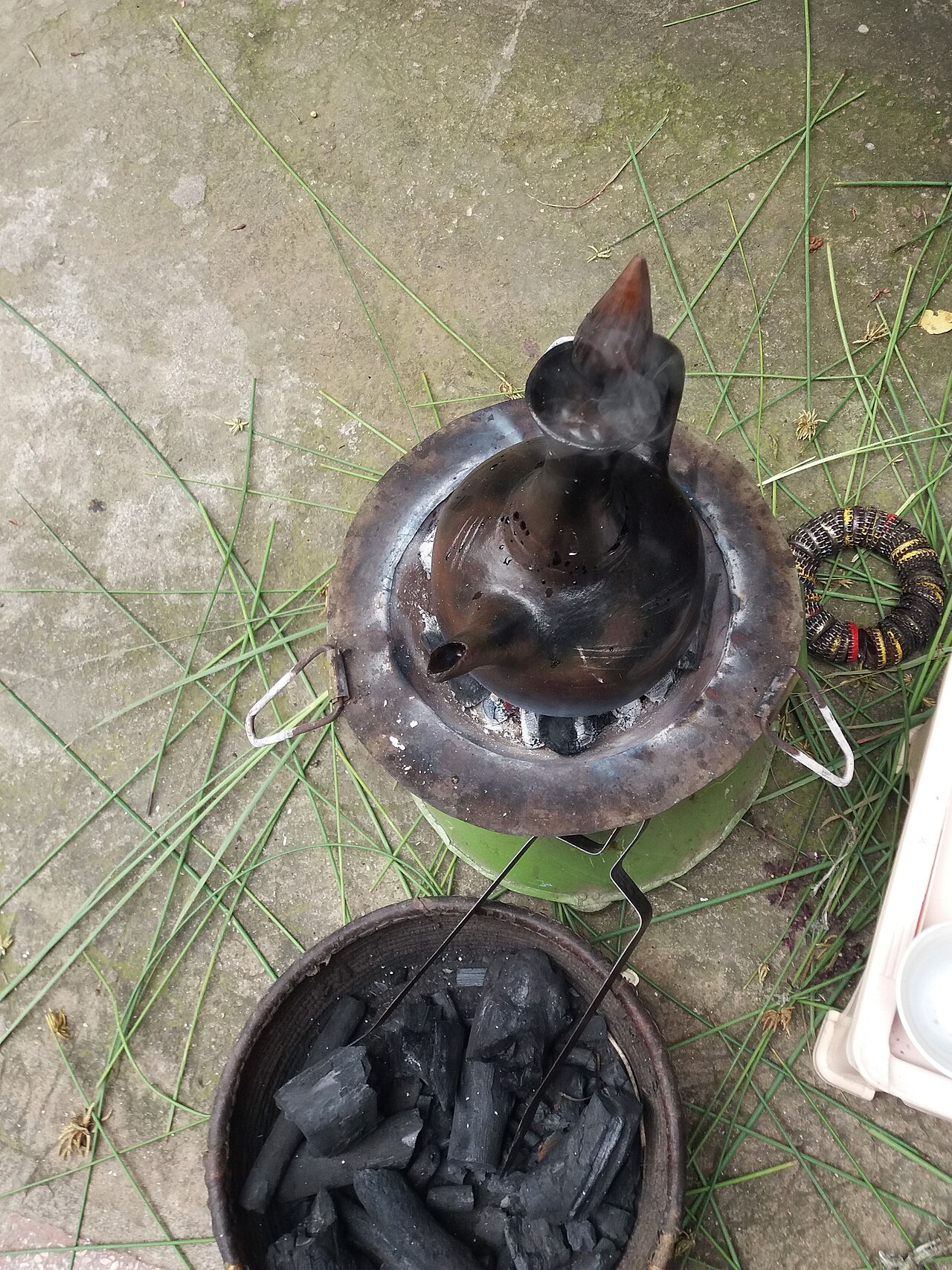
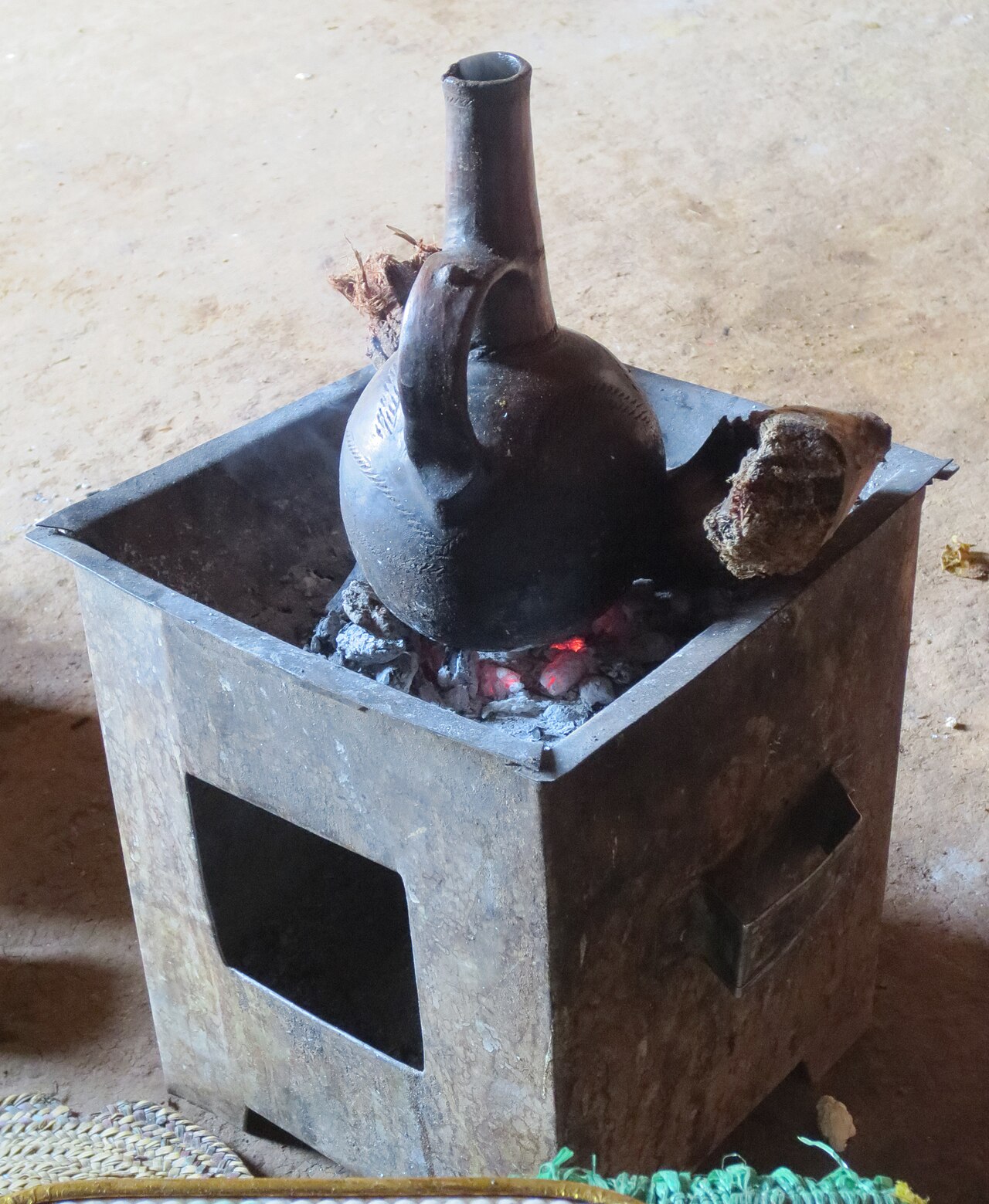
The jebena is used in the coffee ceremony, where women serve coffee to guests. The youngest woman of the family traditionally initiates the process. Coffee is brewed three times a day: morning, noon, and evening. The jebena is placed directly on hot coals, and when the coffee boils up through the neck, it is poured in and out of another container to cool it, then returned to the jebena until it bubbles again. A filter made from horsehair or other material is placed in the spout to prevent grounds from escaping.
Reader's Guide
The jebena holds a significant place in Ethiopian and Eritrean culture as the indispensable centerpiece of the coffee ceremony. According to D. Daniel, 'arguably the most important feature of the ceremony is the jebena, the coffee pot.' Its use defines the ceremony itself: if a jebena is not used to prepare and boil the coffee, a coffee ceremony is not taking place. The jebena's design varies regionally, with Ethiopian and Eritrean styles differing in the number of spouts, and villages often specializing in their own signature shapes. Beyond its practical function, the jebena serves as a status symbol, with decorations and materials reflecting social standing. It is also tied closely to womanhood, both in Ethiopia and among migrant families, where the lengthy brewing process allows time for connection and reinforces collective identity. The jebena is also popular in parts of Egypt. A small restaurant in Addis Ababa is made in the image of an Ethiopian jebena figure, underscoring its iconic status.
Did You Know?
- The jebena's narrow neck acts as a strainer, so coffee grounds do not come out when pouring.
- Ethiopian jebenas typically have a separate spout for pouring coffee, while most Eritrean jebenas have only one spout.
- Coffee brewed in a jebena is served in three stages: awel, kale'i, and baraka.
- A small restaurant in Addis Ababa is built in the shape of an Ethiopian jebena.
The Heart of the Ceremony
The jebena stands as the indispensable centerpiece of the Ethiopian and Eritrean coffee ceremony, a ritual so deeply embedded in daily life that, by all accounts, no true ceremony exists without it. In a household, the process is traditionally initiated by the youngest woman, who announces to everyone present that the brewing is about to begin before roasting the beans and starting the preparation. This act ties the vessel directly to womanhood across the Horn of Africa. The ceremony is not merely about producing a drink; it is a distinctly social occasion. While the beans are roasted and the coffee brews over hot coals, family members gather, converse, and strengthen their bonds. Historically, a family would partake in this ritual three times a day, each time preparing a fresh pot in the jebena. Scholar D. Daniel emphasized that while other elements of the ceremony might be modernized or omitted, the jebena itself has remained the unchanging focal point, both within Ethiopia and among communities abroad.
Form, Function, and Regional Identity
The jebena is a medium-sized ceramic vessel, typically standing between 20 and 45 centimeters tall, crafted from locally sourced clay often gathered by female elders. Its silhouette is defined by a large circular base with a flat bottom for stability, a long narrow neck that doubles as a natural strainer to keep grounds from escaping, and a side handle for pouring. A plug of cloth, straw, or clay seals the top to prevent spills. The most notable regional distinction lies in the spout configuration: Ethiopian jebenas feature a separate lower spout dedicated to pouring out the brewed coffee, while Eritrean variants use a single spout for both filling and serving. In areas where butter is traditionally added to the coffee, some Ethiopian jebenas incorporate two spouts. Villages across the region often specialize in their own signature shapes, and the accompanying clay cups—called sini or finjal in Ethiopia—are crafted from the same material and decorated in a matching style. The vessel is traditionally set on a small decorative cloth or a bed of hay to protect surfaces from the heat of the coals beneath it.
Heirloom, Status, and Craft
Families in Ethiopia and Eritrea typically own just one jebena, and it is passed down through generations as both a practical tool and an ornate heirloom, carrying with it a shared cultural memory. Because potters in the region often work without access to a potter's wheel, a highly decorated jebena represents considerable skill and effort, making it a coveted possession. Its exterior serves as a canvas for social expression: bright, varied color palettes or traditional dot paintings adorn the surface, and among the upper class and royalty, gold and silver plating elevates the vessel into a conspicuous marker of wealth and rank. The specific shape, the size of the base, and even the presence of an additional spout can reflect the ethnic identity of the host family. In this way, the jebena functions as much as an artifact of social standing as it does a kitchen implement. Its ornate nature and the labor invested in its creation ensure that it occupies a position of honor within the household, a tangible link between past and present generations.
Beyond the Borders
The jebena's influence extends well beyond the borders of Ethiopia and Eritrea. In parts of Egypt, the vessel has found a place in local coffee culture, adopted by communities outside its original cultural sphere. Among Ethiopian and Eritrean migrant families, the jebena remains a non-negotiable element of the coffee ceremony, anchoring a delineated routine that connects them to their homeland. The extended time required to roast beans and brew coffee in the vessel provides a natural window for families to gather, share stories, and reinforce the collective identity they have built around their shared heritage. Even as the world modernizes, the jebena endures: contemporary versions crafted from porcelain or metal now resemble Western coffee pots, yet the traditional clay form persists as the definitive symbol of the ritual. In Addis Ababa, a small restaurant has even been designed in the shape of a jebena, a playful architectural nod to the vessel's cultural centrality. Whether in a diaspora kitchen or a capital city dining room, the jebena continues to serve as a vessel for connection.
Gallery
Frequently Asked Questions
What exactly is a Jebena?
The jebena is a traditional clay coffee-brewing flask that sits at the heart of Eritrean and Ethiopian daily life. It is both a functional vessel for preparing coffee and a deeply recognized cultural icon across both nations.
What does a Jebena look like and how big is it?
A typical jebena stands roughly 20 to 45 cm tall and features a rounded body, a narrow neck, a small pouring spout, and a handle linking the neck to the base. The neck-like spout doubles as a natural strainer, letting brewed coffee pour out while trapping grounds inside.
What is the Jebena's role in the coffee ceremony (bunna)?
The jebena is the central artifact of the bunna ritual, the multi-stage coffee ceremony in which beans are roasted, ground, and brewed directly in the pot. Serving coffee from the jebena is what transforms a simple drink into a shared social and spiritual event.
What material is a Jebena made from?
Traditionally the jebena is hand-formed from clay and fired, though modern versions can be produced in porcelain or metal. The classic earthenware build is still the most valued form in Eritrean households.
Why is the Jebena considered important in Eritrean culture?
Beyond brewing coffee, the jebena functions as a symbol of identity, hospitality, and social status. Owning and presenting a jebena during a gathering signals respect for guests and continuity with generations of Eritrean and Ethiopian tradition.
More in Eritrean cuisine 1-24
Spotted an error? Know more?
This is a living reference — every entry is fact-audited, and reader corrections feed straight into our audit queue. Suggest an edit · See this site's audit record