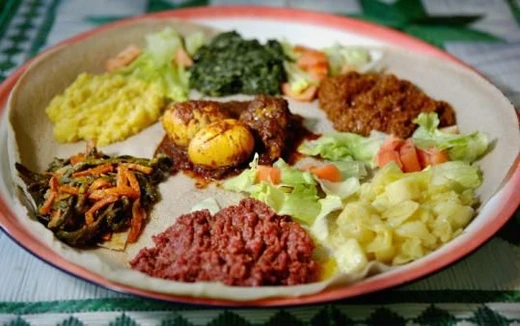
Italian Eritrean cuisine
Fusion of Eritrean spices and Italian dishes.

Wikipedia / Wikimedia Commons
Italian Eritrean cuisine blends Eritrean ingredients and spices with Italian dishes. It is commonly enjoyed by Eritreans in Eritrea, Italian Eritreans, and Italians living in Eritrea, as well as the reverse. A typical dish is "Pasta al Sugo e Berbere"—pasta with tomato sauce and berbere spice—alongside lasagna and cotoletta alla milanese. Italian influence also appears in beverages: although Eritrea has a long coffee tradition, Italian-style espresso and cappuccino are widespread, served in nearly every bar and café in the capital, Asmara. The country’s largest brewery, Asmara Brewery, was built in 1939 during the Italian colonial period under the name Melotti and now produces various drinks. A popular Eritrean alcoholic spirit, common at festivities, is Italian-style Sambuca, called *areki* in Tigrinya.
This cuisine began during the colonial era of the Kingdom of Italy, when many Italians moved to Eritrea. They introduced pasta, which remains a staple in present-day Asmara. Eritrean restaurants often include Italian options like spaghetti or lasagna, reflecting a strong embrace of former colonial influences. The capital, Asmara, is sometimes called "New Rome" or "Italy's African City" due to its Italian architecture, wide streets, piazzas, and coffee bars. Boulevards lined with palms host many bars, restaurants, and cafés serving cappuccinos, lattes, and gelato. Many Eritreans drink espresso made with original Italian machinery, and pizza is a favorite among young people in Asmara.
Popular dishes include Eritrean-style lasagna, cotoletta alla milanese, capretto, spaghetti Bolognese (Pasta al Sugo e Berbere), frittata, panettone, pasta al forno, and pizza.
- field
- Cuisine
- nationality
- Eritrean and Italian
- known_for
- Fusion of Eritrean spices with Italian dishes, especially pasta and coffee
- key_location
- Asmara, Eritrea
Lore & Background
Italian Eritrean cuisine began during the colonial period when Italians moved to Eritrea, introducing pasta, which became a staple in Asmara. A common dish is 'Pasta al Sugo e Berbere', meaning pasta with tomato sauce and berbere spice. Other popular dishes include lasagna, cotoletta alla milanese, and pizza, which is a favorite among young people in Asmara. Italian influence is also apparent in beverages: Italian-style espresso and cappuccino are extremely common, served in practically every bar and coffee shop in the capital. The biggest brewery in the country, Asmara Brewery, was built in 1939 during Italian Eritrea under the name Melotti, and it produces a range of beverages including an Italian-style Sambuca, locally called areki.
Reader's Guide
Italian Eritrean cuisine represents a lasting culinary legacy of Italian colonial influence in Eritrea. It is most prominent in Asmara, often called 'New Rome' or 'Italy's African City' due to its Italian architecture, wide streets, piazzas, and coffee bars. The cuisine is a hearty embrace of former colonial rulers, with Eritrean restaurants offering Italian options like spaghetti and lasagna. This fusion not only shaped local food culture but also contributed to Eritrea's national identity. The cuisine remains common among Eritreans in Eritrea, Italian Eritreans, and Italians living in Eritrea, reflecting a continued cultural exchange. Its significance lies in how it blended two culinary traditions into a distinct style that persists in everyday life, from coffee bars serving espresso using original Italian machinery to festive consumption of areki.
Did You Know?
- A common dish is 'Pasta al Sugo e Berbere', meaning pasta with tomato sauce and berbere spice.
- Asmara Brewery, built in 1939 during Italian Eritrea under the name Melotti, is the biggest brewery in the country.
- Italian-style espresso and cappuccino are extremely common in Eritrea, served in practically every bar and coffee shop in Asmara.
- A popular Eritrean alcoholic spirit common during festivities is Italian-style Sambuca, in Tigrinya called areki.
A Colonial Kitchen Reimagined
The Italian colonization of Eritrea left a culinary imprint that persists to this day, weaving European techniques and ingredients into the local food landscape. Where Ethiopian cooking shows little Italian trace, Eritrean tables regularly feature pasta specials, pizza, gelato, panna cotta, and frittata alongside traditional stews. The most striking fusion occurs when berbere—that complex blend of herbs and spices central to Eritrean cooking—is folded into Bolognese sauce or layered into lasagna, creating dishes that belong to neither culture alone. Panettone, the Italian sweet bread, has become a staple served with tea or during the coffee ceremony. Cotoletta alla milanese, capretto, and pasta al forno round out a menu that reflects decades of cross-cultural exchange. Even the coffee scene in Asmara carries this duality: traditional Eritrean coffee ceremonies coexist with espresso and cappuccino served in nearly every bar and café in the capital, a pairing that would have been unthinkable before the colonial era reshaped the island's relationship with the Mediterranean.
Centuries of Shared Plates, a Coast That Sets the Table Apart
Eritrea and Ethiopia were unified for hundreds of years, and their cuisines remain deeply intertwined, with many dishes culturally belonging to both nations. The core meal structure—spicy stews served over injera, the spongy fermented flatbread made from teff, wheat, or sorghum—is virtually identical across the border. Yet Eritrea's position on the Red Sea coast gives its cooking a seafood dimension that Ethiopian cuisine largely lacks. Fish appears frequently in traditional stews, and the coastal setting shapes the overall flavor profile. Beyond this shared foundation, Eritrean cooking also incorporates greater use of curry powders and cumin, a distinction attributed to its colonial past. The Saho people stand as a notable exception within Eritrea, preferring milder preparations, while the broader population gravitates toward the heat and complexity that berbere delivers. Minor influences from other regional cuisines further enrich the palette, ensuring that no single national tradition fully contains the story of Eritrean food.
The Communal Tray and the Language of Spice
A traditional Eritrean meal unfolds around a large tray set on a low table, where layers of injera are topped with an array of stews and diners tear off pieces to scoop up the food in front of them. The stews themselves form a rich vocabulary: zigni for beef, dorho tsebhi for whole chicken, alicha as a gentler vegetable preparation using turmeric rather than berbere, shiro as a chickpea purée, and hilbet as a vegan cream of fenugreek, lentils, and fava beans. Berbere, a mixture of common and unusual herbs and spices, accompanies nearly every dish and is the defining flavor agent of the cuisine. Ga'at, a stiff porridge related to ugali and fufu, is served with a ladle-carved well filled with melted butter and berbere, surrounded by milk or yogurt. Breakfast brings its own rituals—kitcha fit-fit with clarified butter, fit-fit made from torn injera and leftover stew, or shahan ful, sautéed fava beans with cumin, jalapeños, and olive oil, each offering a distinct morning experience.
From Gesho-Flavored Beer to Espresso in Asmara
Beverage culture in Eritrea spans indigenous brewing traditions and imported European habits. Suwa, a home-brewed beer made from roasted corn, barley, and other grains and flavored with gesho, a type of buckthorn leaf, is prepared for celebrations, while mies, a sweet fermented honey wine, accompanies Christian gatherings. Muslim Eritreans, of course, abstain from alcohol. The coffee ceremony remains one of the most recognizable cultural practices: coffee is offered to visitors, served during festivities, and consumed as a daily staple, with tea (shahee) offered if coffee is politely declined. Yet the Italian legacy is unmistakable in the café scene—espresso and cappuccino are ubiquitous in Asmara's bars and coffee shops. The Asmara Brewery, originally built in 1939 under the name Melotti, still produces a range of beverages today, including an Eritrean-style Sambuca known in Tigrinya as areki, a popular choice during festive occasions that bridges the old colonial world and the present.
Frequently Asked Questions
What is Italian Eritrean cuisine?
It is a fusion food tradition that layers Eritrean spices and ingredients onto classic Italian recipes. The blend is most visible in Asmara, where Eritreans, Italian-Eritreans, and Italians living in the country all share these hybrid plates.
What are the signature dishes of Italian Eritrean cuisine?
The most cited example is Pasta al Sugo e Berbere, a tomato-sauce pasta finished with the fiery Eritrean berbere spice blend. Lasagna and cotoletta alla milanese also appear on menus across the capital as part of this hybrid table.
Where is Italian Eritrean cuisine most commonly enjoyed?
Asmara, Eritrea's capital, serves as the heart of this culinary scene. Nearly every bar, café, and restaurant in the city offers a mix of Italian-format dishes seasoned with local Eritrean flavorings.
How does Italian Eritrean cuisine treat coffee and beverages?
Although Eritrea has its own deep-rooted coffee-ritual tradition, Italian-style espresso and cappuccino are now standard fare in virtually every café in Asmara. The country's largest brewery, Asmara Brewery, also reflects this cross-cultural dining culture.
Why is Italian Eritrean cuisine considered important?
It stands as a living record of Eritrea's colonial-era Italian presence evolving into a shared, everyday food culture rather than a museum piece. The cuisine shows how two culinary traditions can merge organically into a distinct regional identity centered in Asmara.
More in Eritrean cuisine 1-24
Spotted an error? Know more?
This is a living reference — every entry is fact-audited, and reader corrections feed straight into our audit queue. Suggest an edit · See this site's audit record