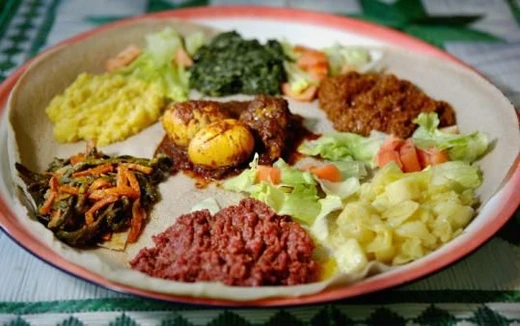
Fit-fit
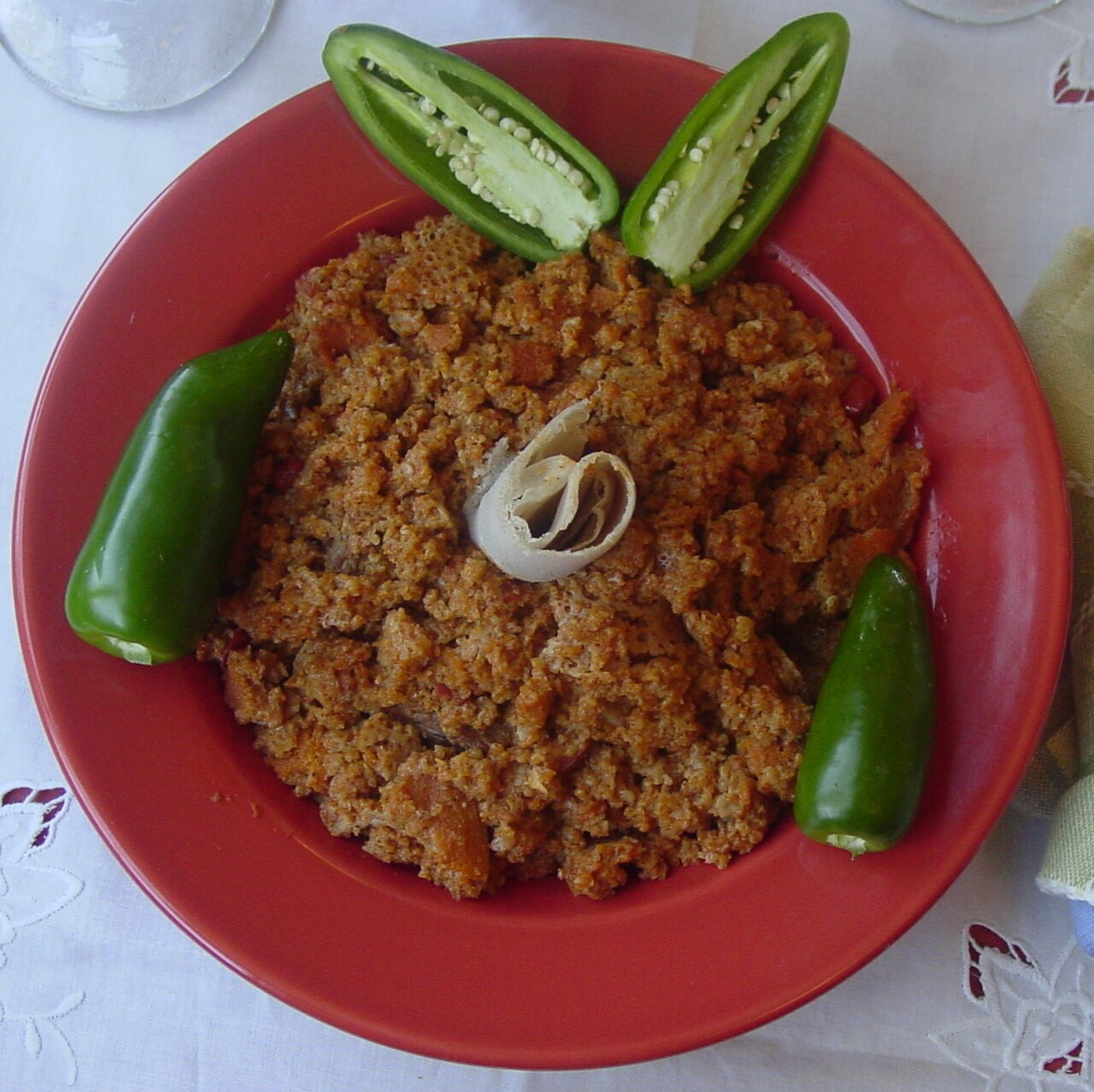
Eritrean breakfast dish of shredded flatbread with spiced butter.

Wikipedia / Wikimedia Commons
Fit-fit (also spelled fir-fir; in Ge'ez: ፍትፍት or ፍርፍር; in Oromo: chechebsaa) is a breakfast dish from Eritrea. It is made by shredding Ethiopian flatbread—either injera or kitcha—and mixing it with a sauce prepared from spiced clarified butter (niter kibbeh) and the hot spice blend berbere.
There are two main types, based on the flatbread used. Injera fit-fit (also called taita fit-fit in Tigrinya) combines shredded injera with berbere, onions, and clarified butter. Variations often add leftover meat sauces (zighni or tsebhi) in Eritrea, or leftover wat in Ethiopia, and may include cubed meat or boiled egg. It is eaten with a spoon if served in a bowl, or with the right hand if served on another piece of injera.
Kitcha fit-fit (known as chechebsa in Oromo) uses shredded unleavened kitcha (or kitta in Amharic) with berbere and clarified butter. It is sometimes eaten with plain yogurt and, unlike most Ethiopian dishes, is typically eaten with a spoon.
- type
- Food dish
- cuisine
- Eritrean and Ethiopian
- main ingredients
- Shredded flatbread (injera or kitcha), spiced clarified butter (niter kibbeh), berbere
- varieties
- Injera fit-fit and kitcha fit-fit (chechebsa)
- typically served
- Breakfast
Lore & Background
There are two main varieties of fit-fit depending on the type of flatbread used: the sourdough injera and the unleavened kitcha. Injera fit-fit (also called taita fit-fit in Tigrinya) combines shredded injera, berbere, onions, and clarified butter. Variations on this basic recipe are common, with the name of the additional item used as a prefix (e.g., shiro fit-fit). In Eritrea, leftover meat sauces (zighni or tsebhi) are often added to injera fit-fit and served for breakfast with raw chili peppers and yoghurt on the side. In Ethiopia, leftover wat is used as a main ingredient along with injera. It can also have cubed meat and boiled egg added.
Reader's Guide
Kitcha fit-fit (known by its Oromo name chechebsa) is a combination of shredded kitcha, berbere, and clarified butter. It is sometimes eaten with plain yogurt. Unlike most Ethiopian foods, it is eaten with a utensil (usually a spoon). Injera fit-fit can be eaten with a spoon when served in a bowl or eaten with the right hand when served atop another piece of injera, as is typical in Ethiopian or Eritrean cuisine. Fit-fit represents a versatile and common breakfast dish in the region, adapting leftover sauces and ingredients to create a filling meal. Its two main forms highlight the different flatbread traditions of the Horn of Africa.
Did You Know?
- Fit-fit is also known as chechebsaa in Oromo.
- Injera fit-fit is sometimes called taita fit-fit in Tigrinya.
- Kitcha fit-fit is widely known by its Oromo name chechebsa.
- In Eritrea, leftover meat sauces (zighni or tsebhi) are often added to injera fit-fit.
A Breakfast Built on Shreds and Spice
Fit-fit, also known as fir-fir, stands as a quintessential Eritrean breakfast dish whose identity rests on three foundational elements: shredded flatbread, spiced clarified butter, and a fiery spice blend known as berbere. The preparation method is deceptively simple yet deeply satisfying—cook down the butter and spices into a rich, aromatic sauce, then work in the torn or shredded bread until every strand is coated and glistening. The flatbread itself comes in two forms: sourdough injera, which brings a tangy, fermented depth, and unleavened kitcha, which offers a milder, denser canvas. In Ge'ez the dish is written as fətfət or fərfər, while Oromo speakers call it chechebsaa. Though rooted in Eritrean tradition, fit-fit has crossed the border into Ethiopian kitchens, where it occupies a similar morning-table role. The dish's appeal lies in its textural contrast—the crisp, fibrous shreds catching pools of golden, spice-laden butter—and its versatility, which allows home cooks to build upon a simple base with whatever ingredients the household happens to have on hand.
Injera Fit-fit: A Sourdough Canvas for Leftovers
The sourdough version of fit-fit, called enjera fetfet in the local tongue or taita fit-fit in Tigrinya, is perhaps the most widely recognized iteration of the dish. Its base recipe pairs shredded injera with berbere, onions, and niter kibbeh, but the true character of the meal often comes from what gets added on top. In Eritrean homes, leftover meat sauces—zighni or tsebhi—are stirred in, and the plate is finished with raw chili peppers and a side of cool yoghurt for balance. Ethiopian kitchens follow a parallel logic, folding in leftover wat or adding cubed meat and a boiled egg to transform the dish into a more substantial morning meal. The naming convention is refreshingly practical: whatever ingredient is added becomes a prefix, so injera mixed with shiro simply becomes "shiro fit-fit." Eating methods vary with presentation. Served in a bowl, diners use a spoon; laid atop a fresh sheet of injera, the dish is picked up with the right hand, in keeping with the broader Ethiopian and Eritrean table customs.
Kitcha Fit-fit and the Unleavened Path
Where injera brings a sour, fermented tang, kitcha—called kitta in Amharic—offers a plainer, unleavened foundation for the same spiced-butter treatment. The resulting dish, known across Ethiopia as kitta fer-fer or kita fir-fir, is most widely recognized by its Oromo name, chechebsa. The core combination remains straightforward: shredded kitcha, berbere, and clarified butter, worked together until the bread absorbs the golden, peppery sauce. A small but notable distinction sets kitcha fit-fit apart from much of the broader Ethiopian culinary landscape: it is customarily eaten with a spoon rather than by hand. This utensil-based approach aligns it more closely with the injera fit-fit served in a bowl, yet it stands apart from the hand-eaten tradition that dominates Ethiopian dining. Plain yogurt, called urgo in Amharic and rug-o in Tigrinya, is a common accompaniment, its cool, mild flavor cutting through the heat of the berbere and the richness of the butter. The dish's simplicity—fewer ingredients, no onions in the basic recipe—makes it a quick, no-fuss breakfast that requires little more than a pan and a handful of pantry staples.
Names, Borders, and a Shared Table
Fit-fit carries a remarkable number of names, a reflection of the linguistic and cultural layers it passes through. In Ge'ez script it appears as fətfət or fərfər; in Oromo it is chechebsaa; in Tigrinya the injera version is taita fit-fit; in Amharic the kitcha version becomes kitta fer-fer or kita fir-fir. This multiplicity of labels mirrors the dish's movement across Eritrean and Ethiopian borders, where it is claimed, adapted, and reinterpreted by different communities. The naming convention for variations—prefixing the added ingredient to "fit-fit"—is a small but telling example of how Ethiopian and Eritrean food culture values transparency: the dish announces its own composition in its name. Fit-fit sits comfortably within broader culinary taxonomies, appearing in lists of African dishes, bread-based preparations, and Ethiopian cuisine. Yet its specificity—shredded rather than whole bread, a particular spice-butter sauce, a breakfast context—gives it a distinct identity that sets it apart from the more familiar injera-and-wat pairings. It is, in essence, a dish of transformation: humble flatbread elevated by spice, butter, and the simple act of tearing it into shreds.
Gallery
Frequently Asked Questions
What is Fit-fit?
Fit-fit is a traditional Eritrean breakfast dish created by shredding flatbread and tossing it with a savory sauce of spiced clarified butter and berbere. It is also spelled fir-fir and known in Oromo as chechebsaa.
What are the core ingredients in Fit-fit?
The base consists of shredded injera or kitcha combined with niter kibbeh (spiced clarified butter) and the berbere hot spice blend. Injera-based versions often also include sautéed onions.
What are the two main varieties of Fit-fit?
Injera fit-fit (called taita fit-fit in Tigrinya) uses shredded injera, while kitcha fit-fit (chechebsa in Oromo) uses shredded kitcha. The choice of flatbread is the defining distinction between the two types.
Is Fit-fit only a plain bread dish, or can it include meat?
While the simplest version is just shredded bread with spiced butter and berbere, many Eritrean households enrich it with leftover meat sauces such as zighni or tsebhi, or fold in cubed meat. In Ethiopia, leftover wat is a common addition.
When is Fit-fit traditionally eaten?
Fit-fit is primarily a breakfast dish across Eritrea and Ethiopia. Its quick preparation from leftover flatbread makes it a practical morning meal that stretches yesterday's bread into a new dish.
More in Eritrean cuisine 1-24
Spotted an error? Know more?
This is a living reference — every entry is fact-audited, and reader corrections feed straight into our audit queue. Suggest an edit · See this site's audit record