Shiro (food)
A staple stew of Ethiopian and Eritrean cuisine.
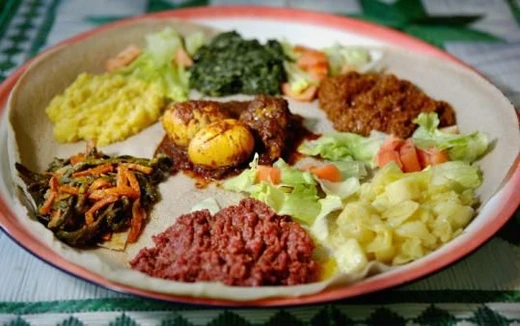
Shiro, also known as shiro wat or tsebhi shiro, is a stew originating from Northern Ethiopia and Southern Eritrea. It is an essential part of Eritrean and Ethiopian cuisine, typically served for lunch or dinner atop injera or kitcha.
- type
- stew
- origin
- Northern Ethiopia and Southern Eritrea
- primary_ingredient
- powdered chickpeas or broad bean meal
- common_variations
- bozena shiro (with meat), tegabino shiro (heavily spiced)
- dietary_note
- vegan, with non-vegan variations using niter kibbeh or meat
Lore & Background
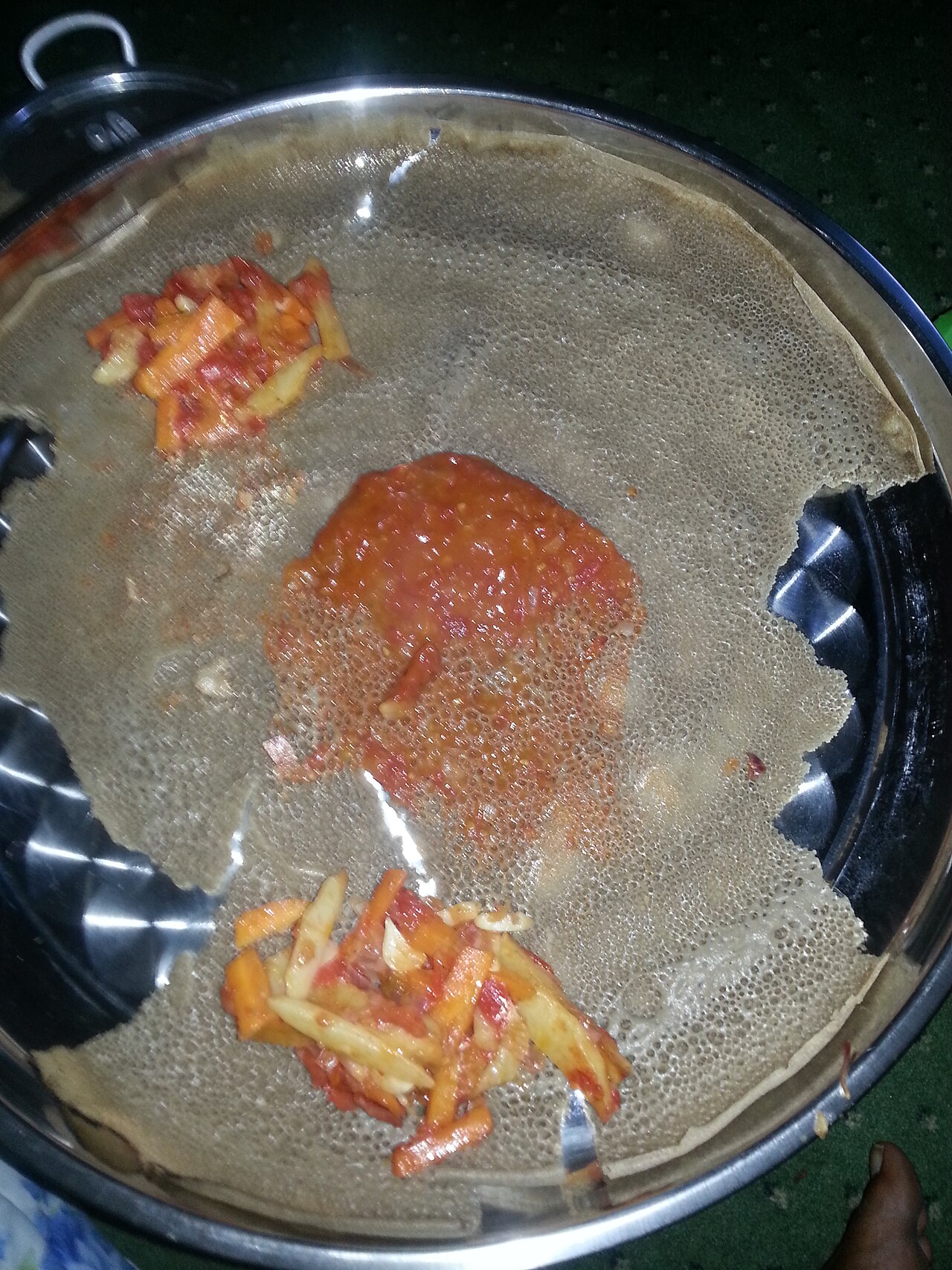
Shiro is a stew whose primary ingredient is powdered chickpeas or broad bean meal, often prepared with minced onions, garlic, and regional variations such as ground ginger or chopped tomatoes and chili peppers. It is served atop injera (leavened flatbread) or kitcha (unleavened flatbread). A special type, tegabino shiro, is made from heavily spiced legumes, chickpeas, field peas, or fava beans, oil (or butter), and water, and is brought bubbling to the table in a miniature clay pot or shallow aluminum pan, often consumed with dark or sergegna injera.
Shiro can also be cooked and added to shredded injera or taita and eaten with a spoon, a version called shiro fit-fit. While shiro is a vegan food, non-vegan variations exist that use niter kibbeh (a spiced, clarified butter) or meat, the latter called bozena shiro. The preparation involves cooking ground chickpeas or lentils, with roasted grains mixed with water, onions, garlic, and ginger, which are sautéed and mixed with peppercorns to create a flavorful base.
Reader's Guide
Shiro holds significance as a fundamental dish in Eritrean and Ethiopian cuisine, serving as a staple for both everyday meals and special occasions. Its versatility is evident in its many variations, from the vegan base to the meat-inclusive bozena shiro, and its adaptability to different fasting seasons such as Tsom (Lent) and Ramadan. The dish's cultural importance is underscored by its presence during these periods of religious observance, where it provides a nutritious and flavorful option. The preparation method, involving roasted legume meal and a sautéed base of onions, garlic, and ginger, reflects a culinary tradition that balances simplicity with depth of flavor. Shiro's legacy lies in its role as a unifying element across regions and dietary practices, demonstrating how a single dish can adapt to diverse contexts while remaining a beloved part of the culinary heritage.
Did You Know?
- Shiro is also called shiro wat or tsebhi shiro.
- Tegabino shiro is brought bubbling to the table in a miniature clay pot or shallow aluminum pan.
- Shiro fit-fit is a version where shiro is added to shredded injera or taita and eaten with a spoon.
- Shiro is a favorite dish during Tsom (Lent), Ramadan, and other fasting seasons.
Origins & Regional Identity
Shiro is a stew that traces its roots to Northern Ethiopia and Southern Eritrea, where it has become an essential pillar of both national cuisines. The dish carries multiple names depending on the language and region: in Ge'ez it appears as šəro, in Amharic as šəro wäṭ (shiro wat), and in Tigrinya as ṣäbhi šəro (tsebhi shiro). This multilingual naming reflects how deeply embedded the dish is across the Horn of Africa's linguistic landscape. Rather than being a single fixed recipe, shiro exists as a family of preparations that shift subtly from one community to the next, with regional variations introducing or omitting ingredients like ground ginger or chopped tomatoes. Its status as a staple for both lunch and dinner underscores its everyday importance, while its presence during major religious observances elevates it to a dish of cultural ceremony. The fact that it appears in lists of African dishes, legume dishes, and stews simultaneously speaks to its versatility and its place at the intersection of multiple culinary traditions.
Core Ingredients & Preparation
At its heart, shiro is built on powdered chickpeas or broad bean meal, which form the thick, legume-rich base of the stew. The preparation begins with cooking these ground legumes, after which roasted grains are combined with water in a separate pot. Into this mixture go minced onions, garlic, and—depending on the regional tradition—ground ginger. These aromatics are sautéed and then blended with peppercorns to build a deeply flavorful foundation before being folded into the legume base. Some versions call for chopped tomatoes and chili peppers, adding a brighter, spicier dimension. The result is a thick, protein-dense stew that is inherently vegan in its classic form. However, the tradition also accommodates non-vegan adaptations: niter kibbeh, a spiced clarified butter, can be stirred in, or meat can be incorporated, in which case the dish takes on the name bozena shiro. This flexibility allows shiro to remain accessible across dietary preferences while preserving its identity as a legume-forward preparation.
Serving Styles & Variations
Shiro is most traditionally served atop injera, the sour leavened flatbread that defines Ethiopian and Eritrean dining, or alternatively on kitcha, an unleavened counterpart. One particularly theatrical presentation is tegabino shiro, in which heavily spiced legumes—chickpeas, field peas, or fava beans—are cooked with oil or butter and water, then brought to the table still bubbling in a miniature clay pot or a shallow aluminum pan. This version is typically paired with dark or sergegna injera. Another beloved adaptation is shiro fit-fit, where the stew is mixed with shredded injera or taita and eaten with a spoon, transforming the dish into a more self-contained, portable meal. These variations demonstrate how a single core recipe can be reshaped by the vessel it is served in, the accompaniment chosen, or the eating utensil preferred, giving diners multiple ways to experience the same fundamental flavors.
Cultural & Religious Significance
Beyond its role as a daily lunch or dinner, shiro holds a special place during periods of religious observance and communal celebration. It is a favorite dish during Tsom, the Ethiopian Orthodox Lent, as well as during Ramadan and other fasting seasons across the region. Its naturally vegan composition—relying on legumes, aromatics, and spices rather than meat or dairy—makes it an ideal choice when dietary restrictions call for the exclusion of animal products. This practical alignment with fasting traditions has cemented shiro's association with spiritual discipline and communal sharing. The dish's presence at these observances transforms it from mere sustenance into a symbol of faith, patience, and togetherness. Families and communities gather around the bubbling pot or the shared platter of injera, and the act of eating shiro becomes as much a ritual of devotion as it is a meal. Its versatility ensures that whether served in a clay pot during a festive gathering or spooned from a bowl of fit-fit during a quiet fasting day, shiro carries the weight of centuries of tradition.
Gallery



Frequently Asked Questions
What is Shiro (food)?
Shiro is a thick, smooth stew deeply rooted in the food traditions of Northern Ethiopia and Southern Eritrea. It is built around a base of ground chickpea or broad bean meal and stands as one of the most recognizable dishes in the region's cuisine.
What are Shiro (food)'s primary ingredients?
The heart of the dish is powdered chickpeas or broad bean meal, which gives it its signature thick, spreadable texture. A berbere-style spice blend and cooking oil are stirred in to develop flavor, while the base itself remains entirely plant-based.
How is Shiro (food) typically served?
It is most often ladled over injera or kitcha as a centerpiece of a lunch or dinner plate. In a traditional shared meal, it appears alongside other stews and vegetable preparations in the middle of the platter.
What variations of Shiro (food) exist?
Two well-known versions are bozena shiro, which folds meat into the mixture, and tegabino shiro, which cranks up the heat with extra spice. The standard preparation, however, stays entirely plant-based.
Is Shiro (food) vegan?
The classic preparation is fully vegan, relying on legume flour, oil, and spices with no animal products. Non-vegan twists do exist, such as adding niter kibbeh (spiced butter) or meat, but the traditional form contains none of these.
More in Eritrean cuisine 1-24
Spotted an error? Know more?
This is a living reference — every entry is fact-audited, and reader corrections feed straight into our audit queue. Suggest an edit · See this site's audit record