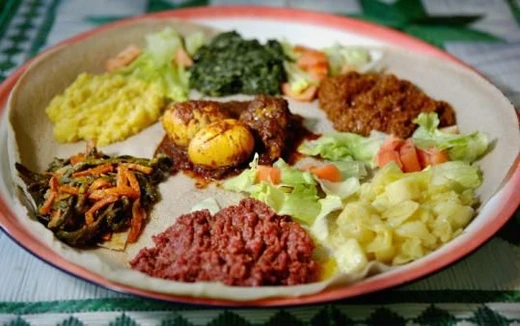
Ful medames
Egyptian national dish of stewed fava beans.

Wikipedia / Wikimedia Commons
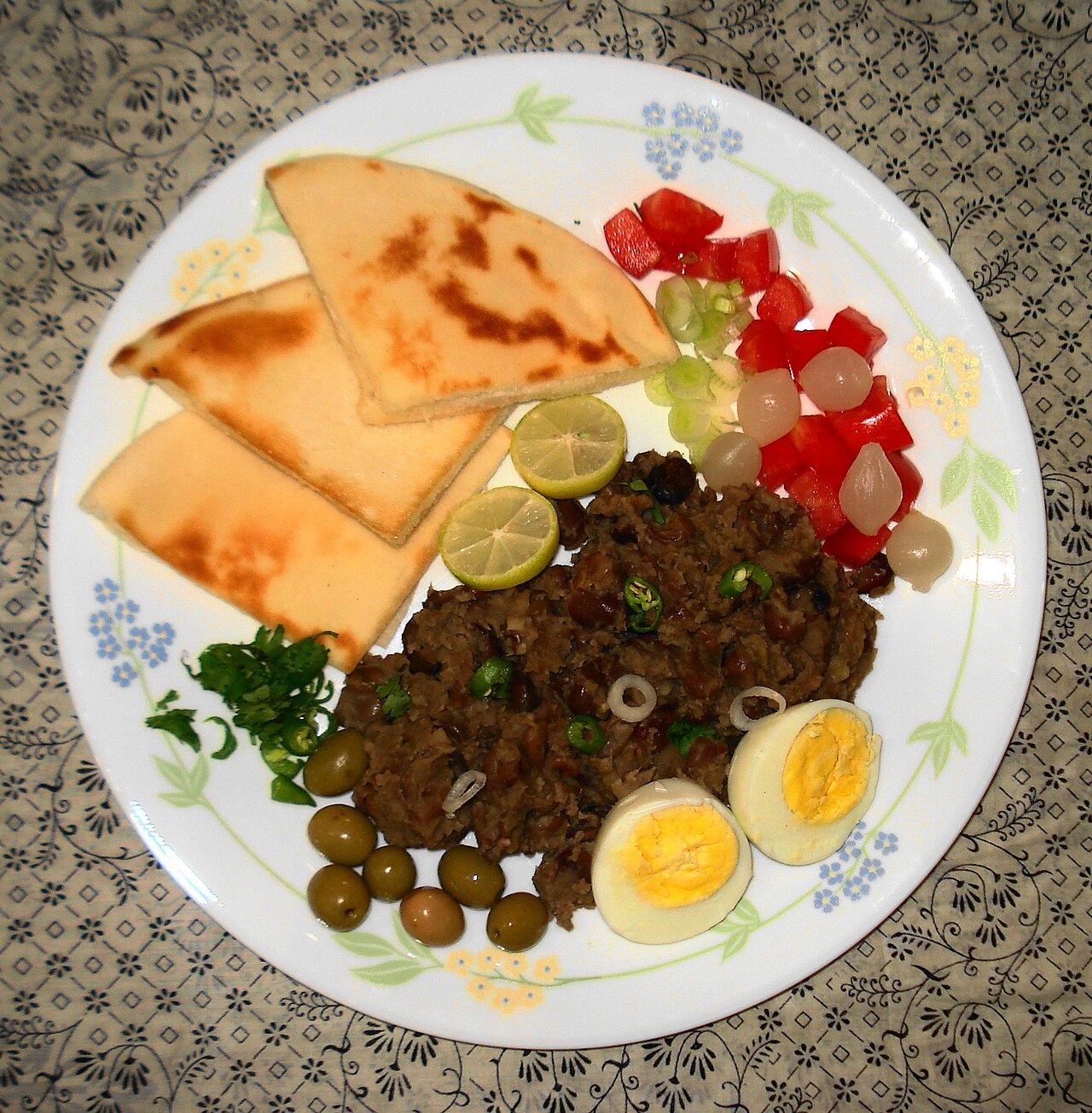
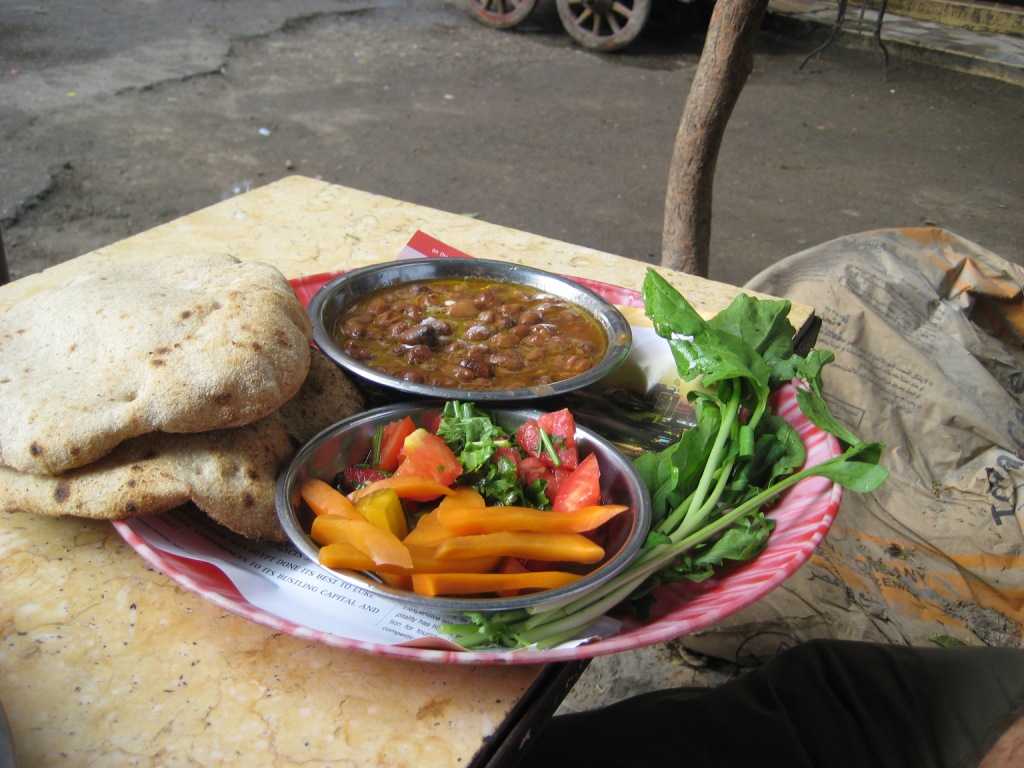
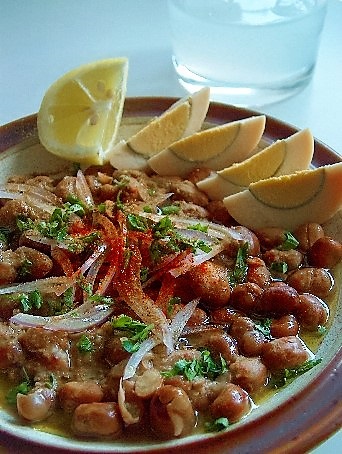
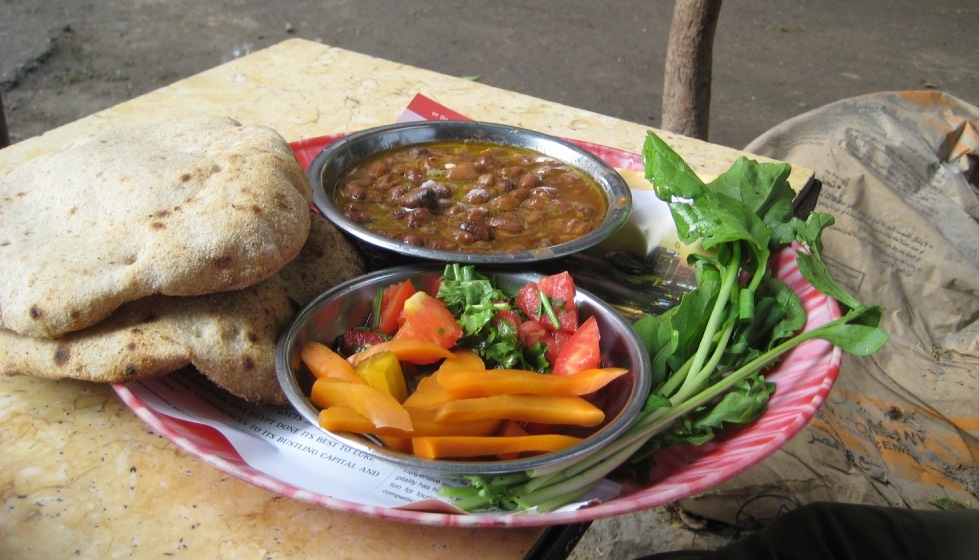
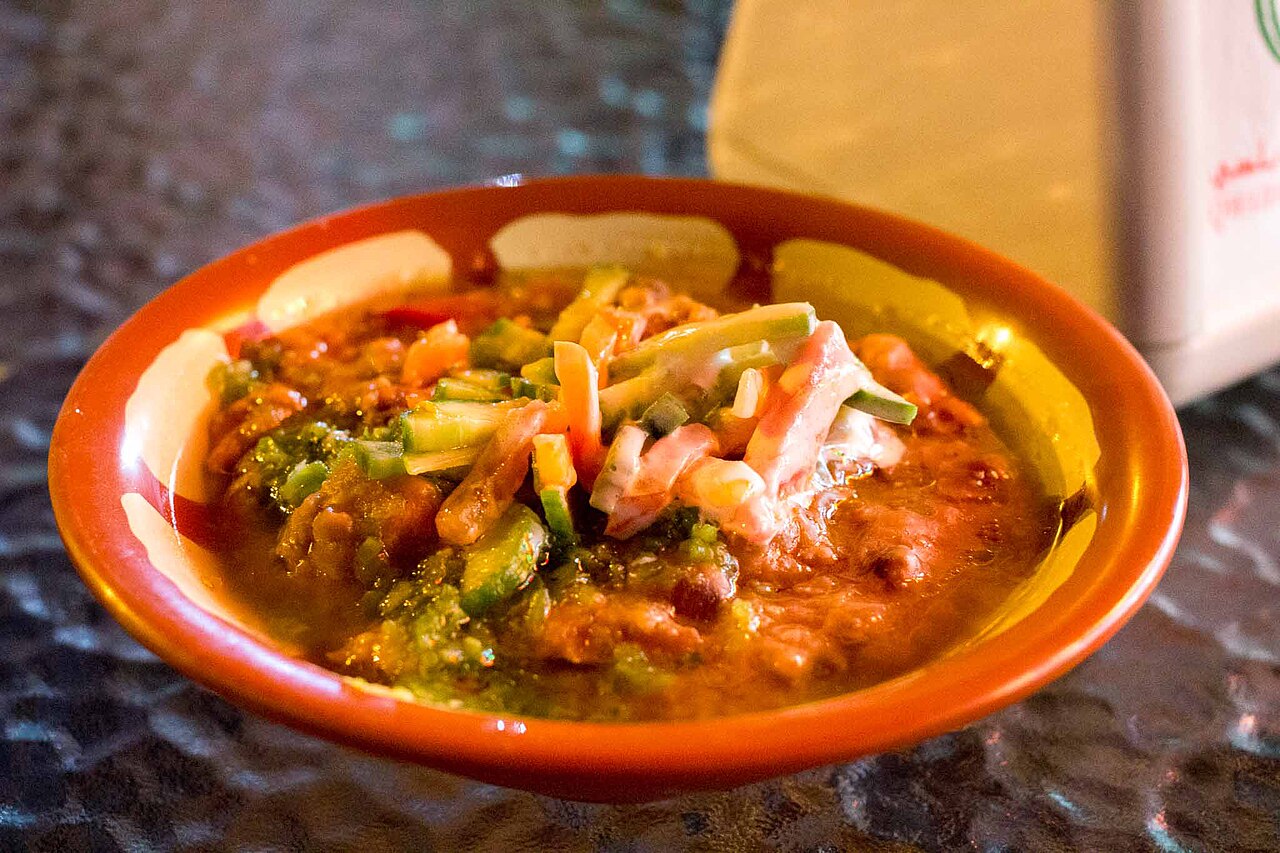
Ful medames (also spelled foule mudammes, or simply ful) is a stew made from cooked fava beans, typically dressed with olive oil and cumin. Optional additions include chopped parsley, garlic, onion, lemon juice, chili pepper, and other vegetables, herbs, or spices. The dish is traditionally prepared and served from a large metal jug. It is a staple food in Egypt and widely regarded as that country's national dish.
Some writers have traced ful medames back to Ancient Egypt. A cache of 2,600 dried fava beans was unearthed at a late Neolithic site near Nazareth, and the dish is mentioned in the Jerusalem Talmud, indicating it was eaten in the Middle East by the fourth century. The basic recipe has remained constant: once the beans are cooked, they are salted and eaten plain or with a variety of accompaniments such as vegetable oil, corn oil, butter, clarified butter, buffalo milk, béchamel sauce, cured beef (basturma), fried or boiled eggs, tomato sauce, garlic sauce, tahini, fresh lemon juice, chili peppers, or other ingredients.
In medieval Cairo, the production of ful was monopolized by residents near the Princess Baths, a public bath close to the fountain of Muhammad ‘Ali Pasha. Bath attendants used garbage as fuel to heat the bath water, and the resulting dump grew around the baths. When the baths closed, the embers remained hot. To take advantage of this, huge pots (qidras) of fava beans were set to simmer overnight and through the day, providing breakfast for the city. Cookshops sent workers to the Princess Baths to buy ful wholesale. In 1860, the Orientalist Edward William Lane described beans being cooked in a pear-shaped earthenware pot buried up to its neck in hot ashes, with the mouth sealed, and eaten with linseed oil or butter and lime juice.
The beans used are small, round fava beans known in Egypt as ful medames ("brown beans"), cooked until very soft. Other varieties include ful rūmī ("Roman" or European broad beans), large kidney-shaped favas, and ful baladī ("country beans") of middling size. Ful nābit are fava bean sprouts, ful akhḍar are fresh green favas, and ful madshūsh are crushed favas.
From Egypt, ful medames spread to other parts of the Arab world, as well as parts of Africa and Asia, particularly Iraq, Lebanon, Syria, Jordan, Israel, Palestine, Saudi Arabia, Yemen, Bahrain, Somalia, Djibouti, Ethiopia, Eritrea, South Sudan, Suda
- type
- Dish
- origin
- Egypt
- main_ingredient
- Fava beans
- typical_serving
- Breakfast
- also_known_as
- Ful, foule mudammes
- traditional_vessel
- Large metal jug
Lore & Background
Some writers have suggested that ful medames dated all the way back to Ancient Egypt. Some evidence of the use of ful is a cache of 2,600 dried fava beans unearthed at a late Neolithic site on the outskirts of Nazareth. This dish is mentioned in the Jerusalem Talmud, indicating that it was used in Middle Eastern countries since the fourth century. Although there are countless ways of embellishing fūl, the basic recipe remains the same. Once the fūl is cooked, it is salted and eaten plain or accompanied by vegetable oil, corn oil, butter, clarified butter, buffalo milk, béchamel sauce, cured beef (basturma), fried or boiled eggs, tomato sauce, garlic sauce, tahini, fresh lemon juice, chili peppers, or other ingredients.
In the Middle Ages, the making of fūl in Cairo was monopolized by the people living around the Princess Baths, a public bath in a tiny compound near today's public fountain of Muhammad ‘Ali Pasha, a block north of the two elegant minarets of the Mosque of Sultan al-Muayyad above the 11th century Bab Zuweila gate. During the day, bath attendants stoked the fires heating the qidras, which are huge pots of bath water. Wood was scarce, so garbage was used as fuel and eventually a dump grew around the baths. When the baths closed, the red embers of the fires continued to burn. To take advantage of these precious fires, huge qidras were filled with fava beans, and these cauldrons were kept simmering all night, and eventually all day too, in order to provide breakfast for Cairo's population. Cookshops throughout Cairo would send their minions to the Princess Baths to buy their wholesale fūl.
In 1860, Orientalist Edward William Lane described beans being cooked in a pear-shaped earthenware which was 'buried, all but the neck, in the hot ashes of an oven or a [Turkish] bath, and having the mouth closely stopped: they are eaten with linseed-oil, or butter, and generally with a little lime-juice'. Fūl is prepared from the small, round bean known in Egypt as fūl medames ('brown beans'). The beans are cooked until very soft. Other kinds of beans used by Egyptian cooks are fūl rūmī ('Roman', i.e. 'European broad beans'), large kidney-shaped fava beans, and fūl baladī ('country beans', which are of middling size). Fūl nābit (Coptic: ⲫⲉⲗⲉⲧⲣⲏⲧ, Feletrat) are fava bean sprouts, fūl akhḍar ('green fūl') are fresh fava beans, and fūl madshūsh ('crushed fūl') are crushed fava beans.
Reader's Guide
Ful medames is a staple food in Egypt and is considered a national dish, with a history that some writers suggest dates back to Ancient Egypt. Evidence of fava bean use includes a cache of 2,600 dried fava beans from a late Neolithic site near Nazareth, and the dish is mentioned in the Jerusalem Talmud, indicating its use in Middle Eastern countries since the fourth century. The dish was exported from Egypt to other parts of the Arab world, as well as parts of Africa and Asia, particularly to Iraq, Lebanon, Syria, Jordan, Israel, Palestine, Saudi Arabia, Yemen, Bahrain, Somalia, Djibouti, Ethiopia, Eritrea, South Sudan, Sudan, Morocco, and Libya. In the Middle Ages, the making of fūl in Cairo was monopolized by people living around the Princess Baths, where huge cauldrons of beans simmered overnight using the embers of the bath fires. The dish is consumed as part of the Lent diet by Christian communities in Arab countries, and in Malta, ful bit-tewm (beans with garlic) is associated with fasting during Lent and Good Friday. Ful medames has also traveled to Malaysia and Singapore, where it was adapted into the local recipe kacang pool, incorporating ghee and minced meat. The basic recipe remains simple: cooked fava beans salted and eaten plain or with various accompaniments, but countless regional variations exist, such as in Syria where beans simmer in copper jars and are served with tahini and Aleppo pepper paste, or in Somalia where the dish is spicier due to the use of the xawaash spice mixture.
Did You Know?
- A cache of 2,600 dried fava beans was unearthed at a late Neolithic site on the outskirts of Nazareth.
- In the Middle Ages, the making of fūl in Cairo was monopolized by people living around the Princess Baths.
- Ful medames is consumed as part of the Lent diet by Christian communities in Arab countries.
- In Malta, ful bit-tewm (beans with garlic) is associated with fasting during Lent and Good Friday.
Ancient Roots & Historical Traces
Ful medames carries one of the longest documented food lineages in the Middle East. Archaeologists uncovered a cache of roughly 2,600 dried fava beans at a late Neolithic site near Nazareth, hinting that the legume was already a valued food source thousands of years before written records existed. Some writers have even traced the dish's ancestry back to Ancient Egypt, though that claim remains speculative. What is more firmly attested is a reference in the Jerusalem Talmud, which places the preparation of fava beans in Middle Eastern kitchens by the fourth century CE. Despite centuries of culinary embellishment, the core preparation has stayed remarkably constant: fava beans are cooked down until very soft, then seasoned simply with salt and a drizzle of oil. This unchanging foundation allowed the dish to survive wars, migrations, and the rise and fall of empires while remaining recognizable from Cairo to the Horn of Africa.
The Cairo Cauldron Tradition
In medieval Cairo, the production of ful medames was not a household affair but a large-scale industrial operation centered on a single location: the Princess Baths, a public bathing compound situated near the Mosque of Sultan al-Muayyad and the Bab Zuweila gate. During the day, bath attendants stoked massive fires to heat the qidras, enormous pots of water for the baths. Because wood was scarce, garbage served as fuel, and a dump gradually accumulated around the site. Once the baths shut down for the evening, the glowing embers remained. Workers would fill huge cauldrons with fava beans and set them over those smoldering fires, letting the beans simmer through the night and into the following day. By morning, the ful was ready to feed Cairo's population. Cookshops across the city dispatched runners to the Princess Baths to purchase their wholesale supply, making this single compound the beating heart of the city's breakfast economy.
A Dish Without Borders
What began as an Egyptian staple traveled far beyond the Nile. Ful medames became a beloved breakfast across the Arab world: simmered overnight in copper jars in Aleppo, blended into a tahini-and-garlic dip in Jordan, and layered atop hummus in Jerusalem, where the combination is known locally as Qudsiyeh. In Somalia, the dish takes on extra heat from xawaash, a spice blend of cumin, coriander, sage, peppercorn, fenugreek, turmeric, ginger, cardamom, cloves, nutmeg, and saffron. In Morocco it is called bissara, cooked with split green peas and enjoyed during cold winter months. In Ethiopia and Eritrea, ful is notably served with wheat-flour bread rather than the usual injera, and places that offer it often maintain a communal kitchen for patrons to bake that bread. The dish even reached Southeast Asia, where in Johore, Malaysia, and Singapore it was reimagined as kacang pool, incorporating ghee, minced meat, kidney beans, and baked beans, a tautological name since both kacang and pool simply mean beans.
The Bean, the Bowl, and the Table
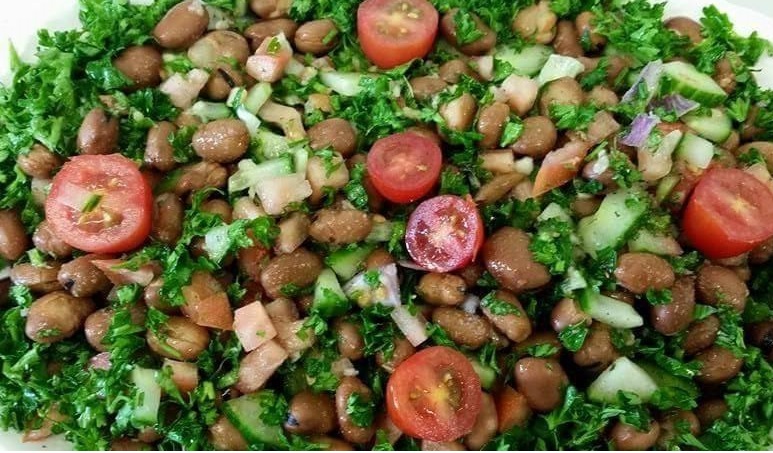
Egyptian cooks distinguish several varieties of fava bean for this dish. The classic ful medames uses small, round brown beans, while fūl rūmī refers to larger kidney-shaped European broad beans and fūl baladī to middling country beans. There are also fūl nābit, bean sprouts called Feletrat in Coptic, fūl akhḍar, fresh green fava beans, and fūl madshūsh, crushed fava beans. Once cooked to a very soft consistency, the beans are typically served from a large metal jug and dressed with olive oil, cumin, and optional additions like chopped parsley, garlic, onion, lemon juice, chili pepper, or other vegetables and herbs. Beyond the classic stew, ful medames salad, fava beans tossed with chopped tomatoes, onion, parsley, lemon juice, olive oil, pepper, and salt, serves as both a mezze and a hearty standalone dish. A close cousin, adas medames, follows the identical preparation method but substitutes lentils for fava beans, a variation found in Egypt and Palestine.
Gallery
Frequently Asked Questions
What is Ful medames?
Ful medames is a stewed fava bean dish that is widely considered Egypt's national dish. You'll also see it called simply 'ful' or 'foule mudammes' in different contexts.
What are the core ingredients in Ful medames?
The foundation is cooked fava beans tossed with olive oil and cumin. From there, cooks often layer in garlic, onion, chopped parsley, lemon juice, chili pepper, and an assortment of other herbs or vegetables.
How is Ful medames traditionally served?
It is classically ladled out of a large metal jug rather than a bowl. The dish is most commonly enjoyed as a breakfast meal.
How far back does Ful medames's history go?
Some writers link the dish to Ancient Egypt, and a cache of 2,600 dried fava beans was uncovered at a late Neolithic site near Nazareth, suggesting fava bean cultivation in the region stretches back thousands of years.
Why is Ful medames considered important in Egyptian food culture?
As a staple made from an inexpensive, protein-rich legume, it has anchored everyday Egyptian meals for centuries. Its status as the country's national dish reflects both its simplicity and its deep cultural roots.
More in Eritrean cuisine 1-24
Spotted an error? Know more?
This is a living reference — every entry is fact-audited, and reader corrections feed straight into our audit queue. Suggest an edit · See this site's audit record